Heads up: this post contains affiliate links. If you buy through them, We Love Upholstery may earn a small commission at no extra cost to you.
Upholstery shampoo is a detergent-rich cleaning foam designed to suspend and lift dirt, oils, and stains from fabric furniture surfaces. Unlike steam cleaning, which uses heat and pressure, upholstery shampoo works through chemical surfactants that break the bond between soil and fabric fibers. Brands like Chemical Guys, P&S Detail Products, and 3D Upholstery Shampoo have built entire product lines around this chemistry. Modern formulas also include optical brighteners and odor neutralizers that refresh fabric appearance and eliminate smells in a single pass.
How does upholstery shampoo work on fabric?
Upholstery shampoo cleans through a foaming action that traps and emulsifies surface dirt, grease, and body oils. The foam is the delivery mechanism. It carries surfactant molecules that attach to soil particles on one end and water on the other, pulling grime away from fabric fibers so it can be extracted.
The process follows a clear sequence:
- Vacuum the surface thoroughly to remove loose debris before any liquid touches the fabric.
- Dilute the shampoo at the manufacturer’s recommended ratio. Professional-grade concentrates are typically diluted 16:1 to 20:1 with water before use.
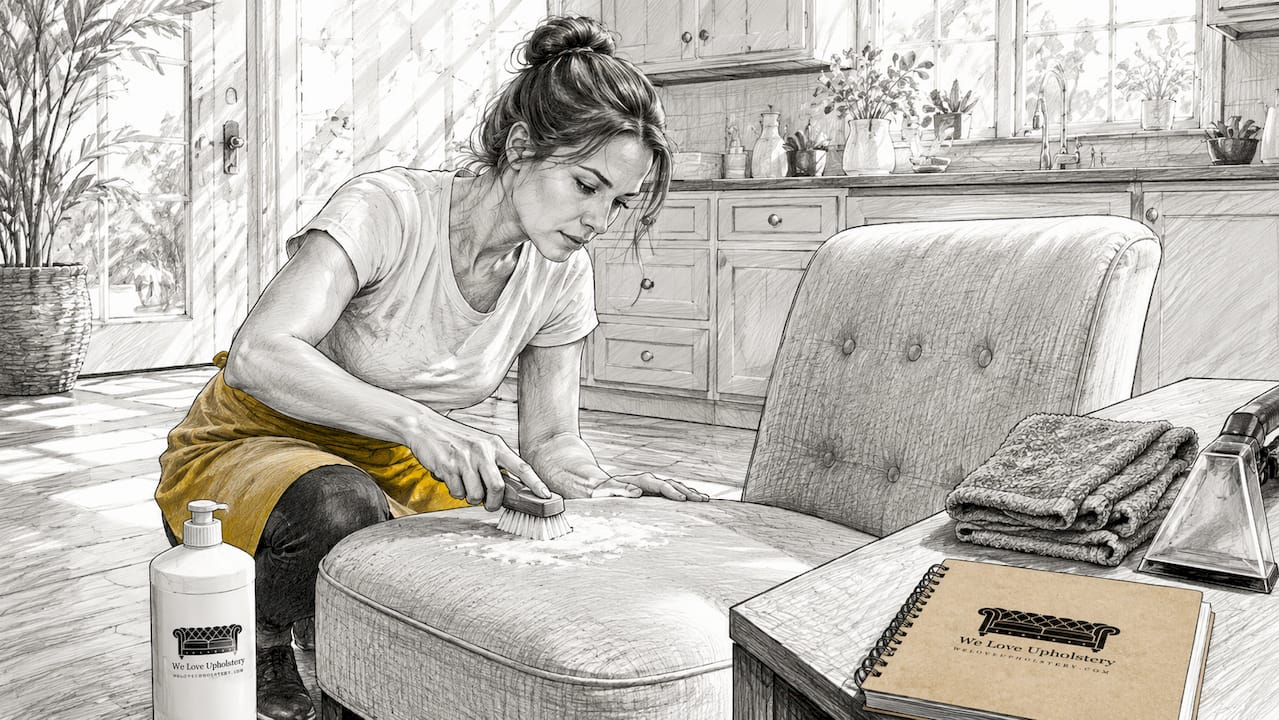
- Apply the foam evenly across the soiled area using a brush, sponge, or upholstery cleaning machine.
- Agitate gently with a soft-bristle brush to work the surfactants into the fabric weave.
- Allow dwell time of 2–5 minutes so the chemistry can fully emulsify the soil.
- Extract the foam and loosened soil using a wet/dry vacuum or extraction machine. This step is non-negotiable.
Steam cleaning uses heat above 200°F to kill bacteria and loosen grime. Upholstery shampoo skips the heat entirely and relies on chemistry instead. That distinction matters when you are working with older furniture or fabrics that react poorly to high temperatures.
Pro Tip: Diluting correctly is not optional. A solution that is too concentrated leaves residue that attracts new dirt faster than the original stain did.
What fabrics and stains work best with shampoo?
Upholstery shampoo performs best on synthetic fabrics, heavily soiled pieces, and older furniture that cannot tolerate steam heat. Polyester, nylon, and olefin upholstery respond well to standard shampoo formulas. These materials hold up to agitation and moisture without warping or shrinking.
The stain types where shampoo excels include:
- Grease and cooking oils absorbed into couch cushions or dining chair fabric
- Body oils and sweat that build up on armrests and headrests over time
- Set-in grime on heavily used pieces like sectionals or car seats
- Pet residue including dander-laden oils that embed in fabric fibers
Delicate natural fibers like silk, velvet, and some wools require a different approach. Fine fabric shampoos often carry a low pH of 5–6 specifically to reduce the risk of dye bleeding or discoloration on sensitive materials. Using a standard formula on silk can strip dye or distort the weave permanently.
Even with pH-balanced products, patch testing on a hidden area is necessary before full application. Experienced professionals treat this as a fixed rule, not a suggestion. A small test spot on the back of a cushion takes 30 seconds and can save an entire piece of furniture.
Pro Tip: Check the fabric tag on your furniture. A “W” code means water-based cleaners like shampoo are safe. An “S” code means solvent-only, and shampoo will likely cause damage.
Understanding your fabric type and care code before you open any cleaning product is the single most important preparation step.
How to use upholstery shampoo for best results
Proper technique separates a clean sofa from a damaged one. The most common DIY mistakes are over-wetting the fabric and skipping the extraction step. Both errors cause problems that are harder to fix than the original stain.
Follow this process for reliable results:
- Clear and vacuum the furniture completely. Remove cushions, vacuum all surfaces including crevices, and let the piece sit dry before you begin.
- Mix your solution correctly. Follow the dilution ratio on the label. For most concentrates, that means 16–20 parts water to 1 part shampoo.
- Apply foam in sections. Work one cushion or panel at a time. Apply a moderate layer of foam, not a saturated soak.
- Agitate with a soft brush. Use circular motions on heavy stains and straight strokes on general soiling. Do not scrub hard enough to distort the fabric pile.
- Let it dwell. Give the surfactants 2–5 minutes to work before you touch the foam again.
- Extract immediately and thoroughly. Use a wet/dry vacuum or a portable extraction machine. Pull as much moisture out as possible.
- Perform a rinse pass. A light pass with clean water followed by another extraction removes detergent residue that would otherwise attract new grime.
- Dry the piece completely. Open windows, run a fan, or use a dehumidifier. Drying times for shampooing run 6–10 hours or longer depending on fabric thickness and humidity.
Over-wetting upholstery can cause mold growth inside cushion foam, mildew odors, and rust staining from metal furniture frames. Using minimum foam and extracting aggressively prevents all three outcomes.
Pro Tip: Point a box fan directly at the cleaned surface after extraction. Moving air cuts drying time significantly and reduces the mold risk on thick cushions.
Upholstery shampoo vs. alternatives: pros, cons, and comparisons
Upholstery shampoo is one of several cleaning methods available to homeowners. Each has a specific strength. Choosing the wrong method for your goal wastes time and can damage fabric.
Upholstery shampoo strengths:
- Highly effective on grease, oils, and surface stains
- Brightens fabric appearance through optical brightener chemistry
- DIY-friendly with no special equipment required beyond a brush and vacuum
- Works at room temperature, making it safe for heat-sensitive fabrics
Upholstery shampoo limitations:
- Longer drying time compared to steam cleaning
- Residue risk if extraction is incomplete
- Does not sanitize deeply or remove allergens as effectively as steam cleaning
| Feature | Upholstery Shampoo | Steam Cleaning |
|---|---|---|
| Dry time | 6–10+ hours | 2–6 hours |
| Allergen removal | Moderate | Excellent |
| Residue risk | Higher without proper rinse | Lower |
| Heat required | No | Yes |
| Best for | Grease, oil stains, surface grime | Bacteria, allergens, deep sanitization |
| DIY accessibility | High | Moderate (requires equipment) |
Common upholstery cleaner alternatives include baking soda, dish soap solutions, and enzyme-based cleaners. Baking soda works well for odor absorption but does not remove grease. Dish soap diluted in water can tackle light stains but leaves residue easily. Enzyme cleaners from brands like Rocco & Roxie or Biokleen target organic stains like urine and blood more effectively than standard shampoo.
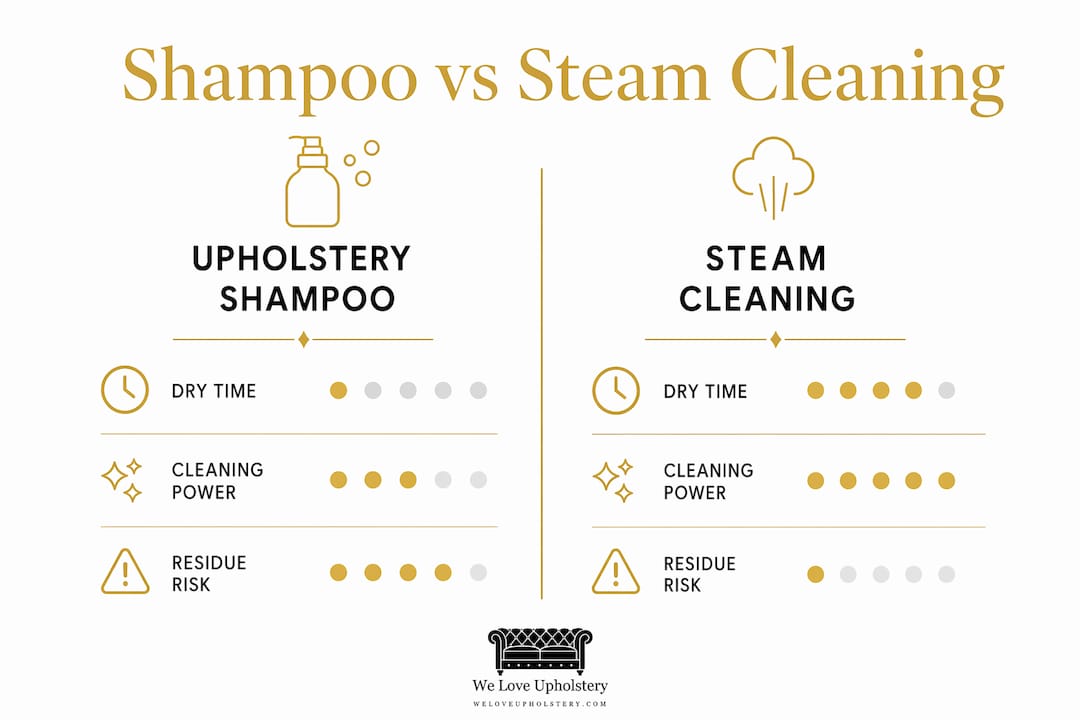
Choose steam cleaning when allergen removal or deep sanitization is the goal. Choose upholstery shampoo when you are dealing with greasy, heavily soiled fabric and want to restore the visual appearance of the piece.
Key takeaways
Upholstery shampoo cleans fabric furniture through surfactant chemistry, and proper extraction is what separates a successful clean from a residue-laden mess.
| Point | Details |
|---|---|
| Definition and function | Upholstery shampoo uses detergent foam and surfactants to lift and emulsify dirt, oils, and stains from fabric. |
| Dilution matters | Professional concentrates require a 16:1 to 20:1 water-to-shampoo ratio for safe, effective results. |
| Fabric compatibility | Synthetic fabrics handle standard shampoo well; delicate fibers like silk need low-pH formulas and a patch test first. |
| Extraction is critical | Incomplete extraction leaves residue that attracts new dirt and shortens how long the fabric stays clean. |
| Drying time risk | Shampooed upholstery takes 6–10+ hours to dry; over-wetting causes mold, mildew, and rust damage. |
What i’ve learned after years of watching homeowners shampoo their furniture
The number one mistake I see is treating shampoo like dish soap. People assume more product means more cleaning power. The opposite is true. Overuse causes residue buildup that makes fabric look dull and dirty within days of cleaning. The shampoo itself becomes the problem.
The second mistake is skipping extraction. I have seen homeowners apply foam, blot it with a towel, and call it done. That approach leaves surfactant chemistry sitting in the fabric weave. It will attract every dust particle and skin oil that touches the cushion afterward.
My honest recommendation: if you are cleaning a piece you care about, invest in a small portable extraction machine. You can rent one from most hardware stores for under $40 a day. The difference in results compared to blotting is not subtle.
For delicate or antique pieces, I always recommend a specialized low-pH shampoo like Prochem’s fine fabric formula rather than a general-purpose product. The pH difference is not marketing. It genuinely reduces the risk of dye bleed on older fabrics. And if you are unsure about a piece’s history or fiber content, a professional clean is worth the cost. Some mistakes in upholstery care are not reversible.
— Dustin
Take your upholstery care further with Weloveupholstery
Knowing how to shampoo your furniture is one piece of a larger maintenance picture. Weloveupholstery publishes hands-on guides written by practitioners who work with upholstered furniture regularly, not generic advice recycled from product labels.
If you want to understand which fabrics respond best to which cleaning methods, the upholstery fabric guide at Weloveupholstery breaks down fiber types, care codes, and cleaning compatibility in plain language. For furniture that needs more than a clean, the seam repair guide and fabric glue repair tutorial walk you through fixes that hold. Weloveupholstery covers the full range of DIY upholstery care so you can maintain and restore furniture with confidence.
FAQ
What does upholstery shampoo actually do to fabric?
Upholstery shampoo uses surfactants to break the bond between soil and fabric fibers, suspending dirt and grease in foam so it can be extracted. Modern formulas from brands like Chemical Guys also include optical brighteners that restore fabric color and odor neutralizers that eliminate embedded smells.
Is upholstery shampoo safe for all fabric types?
Standard upholstery shampoo is safe for most synthetic fabrics but can damage delicate natural fibers like silk or velvet. Fine fabric formulas with a pH of 5–6 reduce the risk, and patch testing on a hidden area before full application is always required.
How long does upholstery take to dry after shampooing?
Shampooed upholstery typically takes 6–10 hours or longer to dry fully, depending on fabric thickness and room humidity. Using a fan and extracting as much moisture as possible during cleaning shortens that window considerably.
Can i use dish soap instead of upholstery shampoo?
Dish soap diluted in water works for light surface stains but leaves residue more readily than purpose-built upholstery cleaning solutions. For grease-heavy or set-in stains, a dedicated shampoo with proper surfactant chemistry delivers significantly better results.
How often should i shampoo upholstered furniture?
Most household upholstery benefits from a full shampoo clean once or twice a year, with spot treatments handled as stains occur. High-traffic pieces like family room sofas or dining chairs may need more frequent attention depending on use.