Heads up: this post contains affiliate links. If you buy through them, We Love Upholstery may earn a small commission at no extra cost to you.
Upholstery is defined as a multi-layered system of materials including a structural frame, support components like springs and webbing, padding layers, and an outer textile or leather covering that together create comfortable, durable furniture surfaces. The craft goes far beyond choosing a fabric. Every layer serves a specific function, and when one fails, the whole piece suffers. Whether you are shopping for a new sofa, planning a reupholstery project, or just trying to understand what makes quality furniture last, knowing the upholstery definition gives you a real advantage. This guide breaks down each layer, compares traditional and modern materials, and explains why hidden components like lining fabric matter more than most people realize.
What is upholstery made of? The main layers explained
Upholstery consists of four main functional layers: the frame, the support system, the padding, and the outer cover. Each layer has a distinct job, and the quality of each one directly affects how long your furniture lasts and how comfortable it feels.
The frame is the skeleton of any upholstered piece. Hardwood frames made from kiln-dried oak or beech resist warping and cracking far better than softwood or particleboard alternatives. A weak frame means sagging cushions and wobbly joints, no matter how good the fabric on top looks.
The support system sits directly on the frame. This includes:
- Coil springs: Traditional eight-way hand-tied coil springs offer deep, responsive support and are common in high-end sofas.
- Serpentine springs: S-shaped metal springs used in modern furniture for a firmer, more uniform feel.
- Webbing: Interlaced strips of jute or synthetic material that create a base for padding in lighter pieces like dining chairs.
The padding layer sits above the support system and defines the feel of the piece. Foam is the most common modern padding material, available in densities ranging from soft to extra firm. Dacron batting wraps over foam to soften edges and add a rounded, plush appearance. Traditional builds use horsehair, coir fiber, or cotton batting, which require more skill to shape but can last for decades.
The outer cover is the fabric or leather you see and touch. The outer fabric’s role is primarily aesthetic and protective. All structural shape, firmness, and comfort must be built in the lower layers before any fabric is applied.
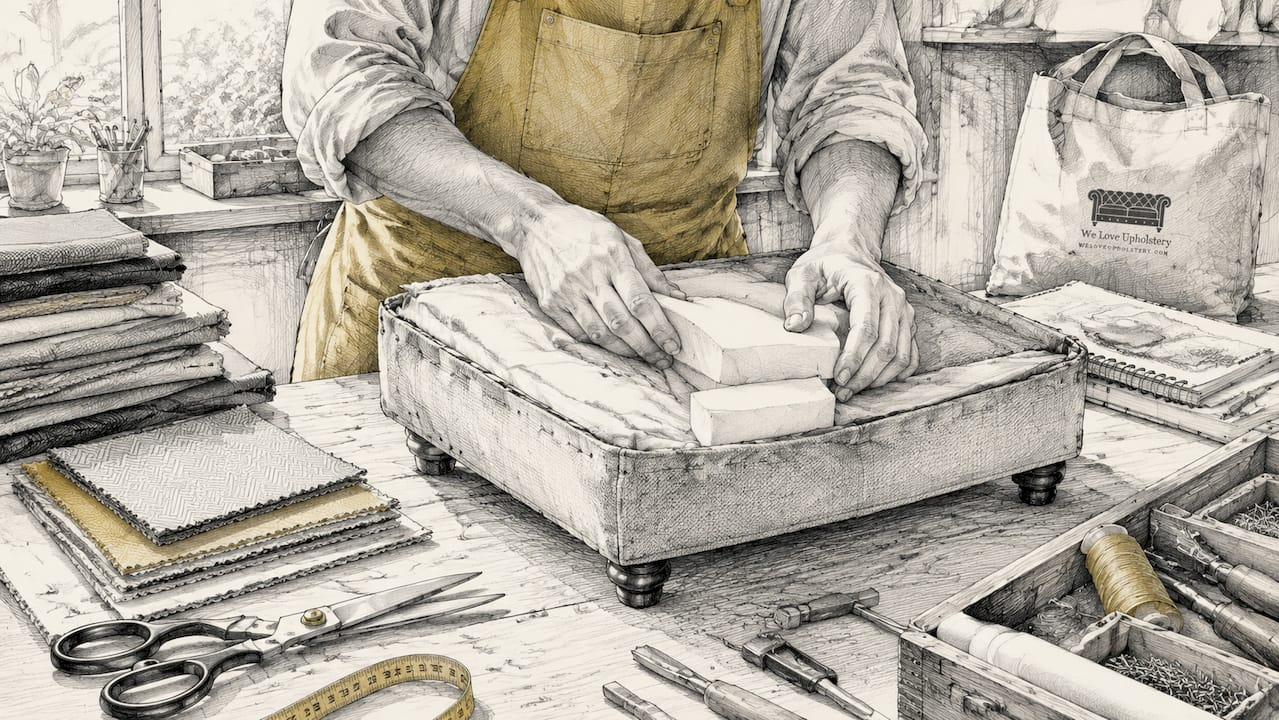
Pro Tip: Before buying a sofa, press firmly on the seat cushion and release. If it springs back quickly and evenly, the support system is solid. If it sinks slowly or unevenly, the springs or webbing may already be compromised.
How do traditional and modern upholstery methods compare?
The table below shows the key differences at a glance.
| Feature | Traditional upholstery | Modern upholstery |
|---|---|---|
| Padding materials | Horsehair, coir, cotton batting | High-density foam, dacron |
| Support system | Eight-way hand-tied coil springs | Serpentine springs, webbing |
| Base fabric | Hessian, scrim, muslin | Synthetic liners, non-woven backing |
| Skill level required | High, labor intensive | Moderate, tool assisted |
| Durability | Exceptional with proper care | Good, varies by foam quality |
| Repairability | Highly repairable layer by layer | Easier to replace than repair |
| Typical use | Antiques, restoration, bespoke pieces | Mass-market and mid-range furniture |
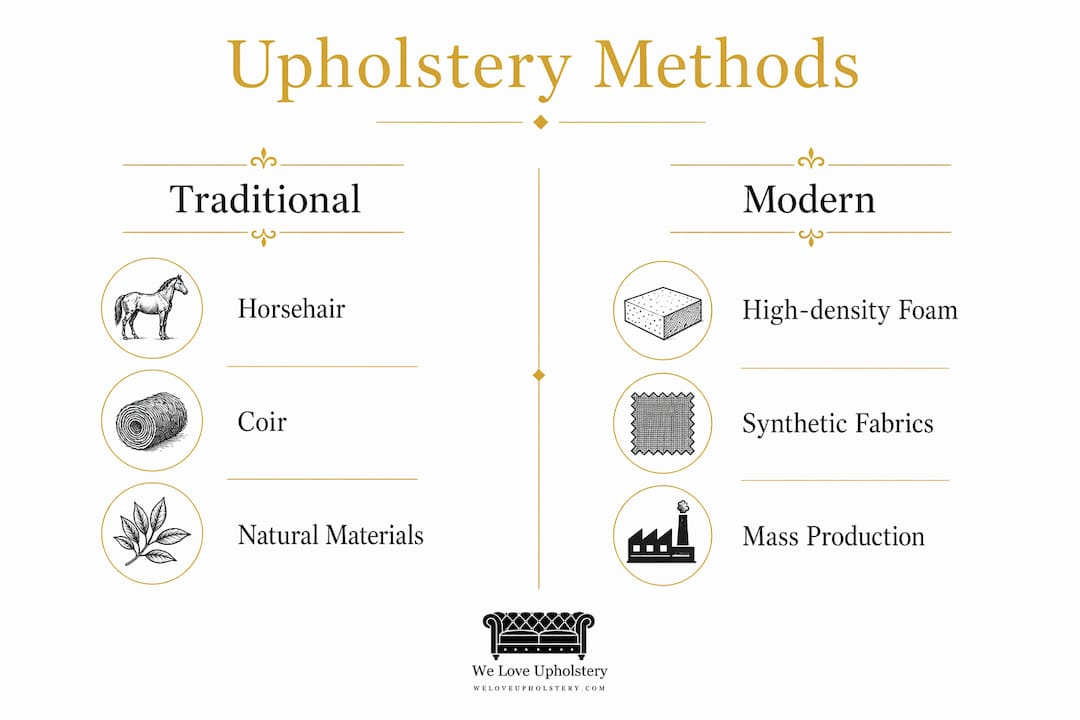
Traditional methods demand more time and skill, but they reward that investment with furniture that can be repaired and rebuilt rather than replaced. A Victorian armchair built with hand-tied springs and horsehair stuffing can outlast three or four modern sofas if maintained properly. You can explore vintage upholstery methods in detail to understand how these techniques apply to restoration projects today.
Modern upholstery trades longevity for speed and affordability. High-density foam degrades over time, typically losing its resilience after ten to fifteen years of regular use. That is not a flaw so much as a design reality. Knowing this helps you set realistic expectations when buying or reupholstering furniture.
What is upholstery lining fabric and why does it matter?
Upholstery lining fabric is a layer of material applied between the padding and the outer cover to stabilize, protect, and support the visible fabric. Lining fabric prevents outer fabric distortion and extends furniture life by reducing friction between layers and blocking moisture transfer.
Think of lining as the foundation garment of your sofa. Backing fabric stabilizes upholstery by preserving tautness and preventing wrinkles, sagging, and seam splitting under heavy use. Without it, even an expensive outer fabric will stretch, bubble, and fail at the seams within a few years.
Common lining materials include:
- 100% cotton muslin: The most widely used upholstery lining. Breathable, affordable, and easy to work with. Cotton muslin lining costs around $12.50 per yard in 2026.
- Hessian (burlap): A coarser woven fabric used as a base layer over springs and webbing in traditional builds.
- Non-woven synthetic liners: Used in modern production for speed and consistency, though less breathable than cotton.
- Scrim: A loosely woven fabric used in traditional upholstery to hold stuffing in place before the final cover goes on.
Pro Tip: When reupholstering a chair or sofa, always replace the lining fabric even if it looks intact. Old lining loses its tensile strength and will cause your new outer fabric to fail prematurely.
What materials are used in upholstery and how do you choose?
The main categories of upholstery fabric include:
- Natural fibers: Cotton, linen, and wool offer breathability and a classic look. Cotton is versatile and easy to clean. Linen is durable but wrinkles easily. Wool resists pilling and holds color well.
- Synthetic fabrics: Polyester, nylon, and microfiber deliver stain resistance and durability at a lower cost. Microfiber in particular is a strong choice for households with children or pets.
- Leather: Full-grain leather is the most durable upholstery material available. It develops a patina over time and is easy to wipe clean. Top-grain leather offers a similar look at a lower price point.
- Vinyl: A synthetic leather alternative that costs less and resists moisture. Vinyl is common in commercial settings like restaurants and medical offices.
- Blended fabrics: Combinations like cotton-polyester or wool-nylon balance the best properties of each fiber.
Beyond fabric type, two finishing details affect both function and appearance. Upholstery piping is a narrow cord covered in fabric that is sewn along seams to define edges and add structure. Upholstery listing refers to the strips of fabric or webbing sewn to the edges of seat cushions to attach them to the frame. Both details are signs of quality construction and are worth checking when evaluating a piece of furniture.
For dining chairs specifically, fabric choice also affects ergonomics and maintenance. A homeowner’s guide to dining chair upholstery covers how different materials hold up to daily use and spills.
How does upholstery knowledge help with furniture care and DIY projects?
Understanding upholstery basics changes how you buy, maintain, and repair furniture. Upholstery work is a system of controllable decisions about materials, repairs, and fit, not just a cosmetic treatment. That perspective shifts you from reactive to proactive when dealing with furniture problems.
For furniture maintenance, knowing your layers helps you target the right fix:
- Sagging seat cushions usually mean the foam has compressed or the webbing has stretched, not that the fabric needs replacing.
- Fabric pilling or bubbling often points to a failed lining layer underneath, not a defect in the outer fabric itself.
- Squeaking or rocking frames signal loose joints that must be repaired before any reupholstery work begins. Ignoring frame issues leads to premature fabric sagging and failure.
For DIY projects, start with a thorough inspection before buying any materials. Check the frame for cracks, loose joints, and broken springs. Assess the padding for compression and the lining for tears. Only after that assessment should you choose your outer fabric and calculate yardage.
The upholstery tools checklist at Weloveupholstery covers everything a beginner needs before starting a first project, from staple guns to webbing stretchers.
Key Takeaways
Upholstery is a layered system where frame quality, support structure, padding, lining, and outer fabric each play a distinct role in determining furniture comfort, durability, and appearance.
| Point | Details |
|---|---|
| Upholstery has four core layers | Frame, support system, padding, and outer cover all work together to create durable furniture. |
| Lining fabric is not optional | Cotton muslin lining prevents fabric distortion, seam failure, and premature wear of the outer cover. |
| Traditional vs. modern methods differ in repairability | Traditional builds use natural materials and can be repaired layer by layer; modern foam builds are typically replaced. |
| Fabric choice must match intended use | Microfiber suits high-traffic homes; leather suits longevity; vinyl suits moisture-prone environments. |
| Frame inspection comes before fabric selection | Loose joints or broken springs must be fixed before reupholstering or new fabric will fail quickly. |
Why the hidden layers matter more than the fabric you pick
Most people walk into a furniture store and head straight for the fabric swatches. I understand the instinct. Color and texture are what you see first. But after years of working with upholstered furniture, I can tell you that the fabric is almost never the reason a piece fails.
The failures I see most often trace back to compressed foam that was too soft to begin with, webbing that was stapled instead of properly tensioned, or a frame with loose joints that nobody bothered to fix before the new cover went on. The outer fabric just reveals those problems. It does not cause them.
The misconception that upholstery is mostly about fabric leads people to spend heavily on premium textiles and then skip the lining, use cheap foam, or ignore a wobbly leg. That is the wrong order of priorities. Invest in the foundation first. A well-built base with quality lining and solid support will make even a mid-range fabric look and feel better than a luxury fabric stretched over a compromised structure.
— Dustin
Start your upholstery project with the right resources
Whether you are picking fabric for a first reupholstery project or trying to understand why your sofa is sagging, the right information makes all the difference.
Weloveupholstery brings together practical, hands-on guides written by experienced practitioners for DIY homeowners and anyone serious about furniture restoration. The upholstery fabric guide walks you through every major fabric type with honest guidance on durability, maintenance, and best use cases. The materials and supplies archive covers everything from foam and batting to lining fabrics and tools. If you are ready to get started, the step-by-step DIY guides at Weloveupholstery give you a clear path from inspection to finished result.
FAQ
What does upholstery mean?
Upholstery refers to the materials and craft used to cover furniture with padding, fabric, or leather to create comfortable, durable seating surfaces. The term covers both the finished result and the process of applying those layers.
What is upholstery lining used for?
Upholstery lining fabric sits between the padding and the outer cover to stabilize the fabric, reduce friction, and prevent sagging, stretching, and seam failure over time.
What is upholstery piping?
Upholstery piping is a narrow fabric-covered cord sewn along seams and edges of furniture to define the shape, reinforce seams, and add a finished, tailored appearance.
What is upholstery listing?
Upholstery listing refers to strips of fabric or webbing sewn to the edges of seat cushions or padding to anchor them securely to the furniture frame and prevent shifting.
What is upholstery underlining?
Upholstery underlining, also called backing or interlining, is a layer of material applied directly to the back of the outer fabric before it is installed to add body, prevent stretching, and extend the fabric’s lifespan.