Heads up: this post contains affiliate links. If you buy through them, We Love Upholstery may earn a small commission at no extra cost to you.
Bespoke furniture upholstery is defined as a fully custom, made-to-order process where every element of a piece is engineered from scratch based on the client’s exact specifications. Unlike standard retail furniture or even modified custom orders, bespoke upholstery starts with no template, no pre-existing mold, and no compromises. The frame is built from the ground up, the materials are chosen for your specific environment, and every dimension reflects your space and lifestyle. If you have ever struggled to find a sofa that fits an awkward alcove or a chair that matches a very specific fabric, this is the process that solves that problem completely.
What is bespoke furniture upholstery, and how does it differ from custom?
Bespoke furniture upholstery is the practice of originating a piece from scratch rather than personalizing an existing design. The word “bespoke” comes from the tailoring industry, where it described a suit made entirely to a client’s measurements with no standard pattern involved. In furniture, the same principle applies. The craftsperson builds the frame, selects the internal structure, and applies the upholstery as one continuous, client-driven process.
Custom upholstery, by contrast, modifies an existing model. You might choose a different fabric, change the leg finish, or request a slightly wider seat. The underlying frame and proportions stay the same. Bespoke starts with a blank slate. That distinction matters enormously when your space has unusual dimensions or your design vision does not match anything on the market.
Bespoke vs. custom upholstery: a side-by-side comparison
| Feature | Bespoke upholstery | Custom upholstery |
|---|---|---|
| Starting point | Original design from scratch | Existing model as base |
| Frame engineering | Built specifically for the project | Adapted from standard template |
| Dimension control | Exact to client specification | Limited modifications |
| Design freedom | Total creative control | Constrained by base model |
| Lead time | Longer, due to full build process | Shorter, modifications only |
| Best for | Unique spaces, specific needs | Standard rooms, minor preferences |
The table above shows why bespoke is not simply a premium tier of custom. It is a fundamentally different process. Smithers of Stamford, a well-known British furniture maker, describes bespoke as creating a new standard rather than adjusting an existing one. That framing captures the philosophy precisely.
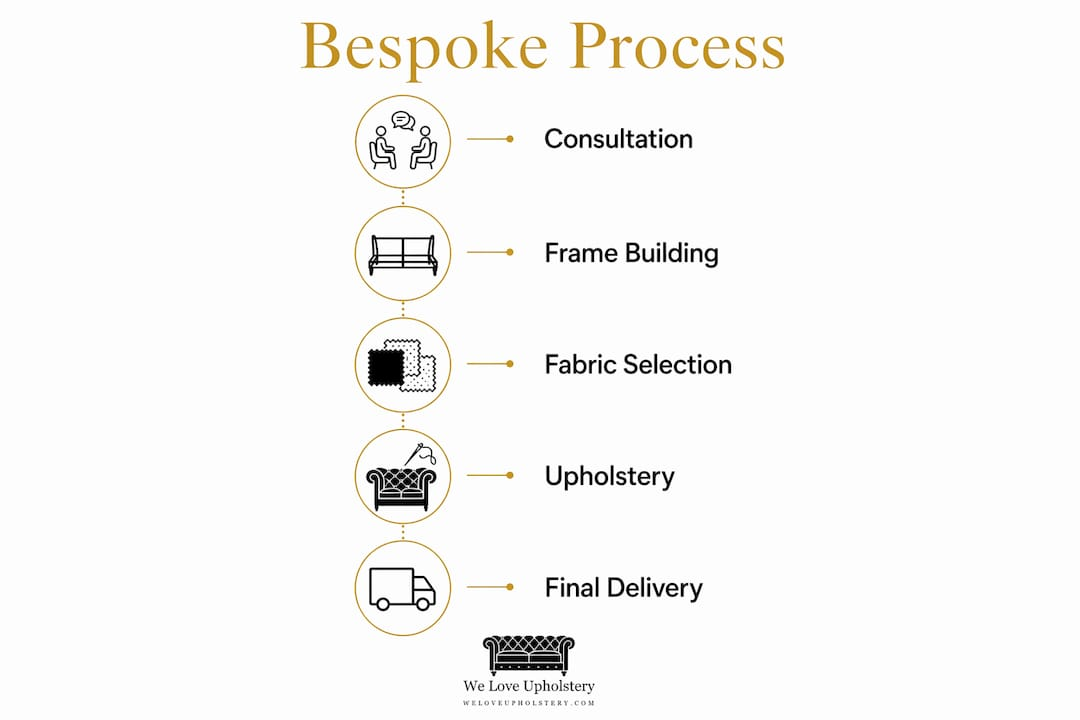
How does the bespoke upholstery process work from start to finish?
The bespoke upholstery workflow is more involved than most people expect. It requires genuine collaboration between you and the craftsperson at every stage. Here is how the process typically unfolds:
- Client brief. You provide detailed information including room dimensions, style references, intended use, and any structural requirements. A thorough brief reduces ambiguity and leads to more accurate quotes and timelines.
- Quote and timeline. Reputable workshops respond with a quote, often within one business day. Lead times vary based on complexity, but expect several weeks for full frame construction and upholstery.
- Frame engineering. The craftsperson builds the frame from scratch using hardwood or engineered timber. The frame is designed specifically for your requested seat depth, cushion density, and back angle.
- Material and fabric selection. You choose from leather, hand-loomed weaves, performance fabrics, or fiber blends. The selection is guided by your room’s lighting, traffic levels, and aesthetic goals.
- Upholstery construction. The craftsperson applies padding, springs, webbing, and fabric using techniques suited to the design. Reinforced seams and tailored cushion density are built in from the start.
- Final review and delivery. The finished piece is inspected against the original brief before delivery. Adjustments are made if anything deviates from the agreed specification.
Pro Tip: Bring photos, fabric swatches, and a floor plan to your initial brief meeting. The more specific your references, the more accurately the craftsperson can price and plan the project.
How to choose fabrics and materials for bespoke upholstery
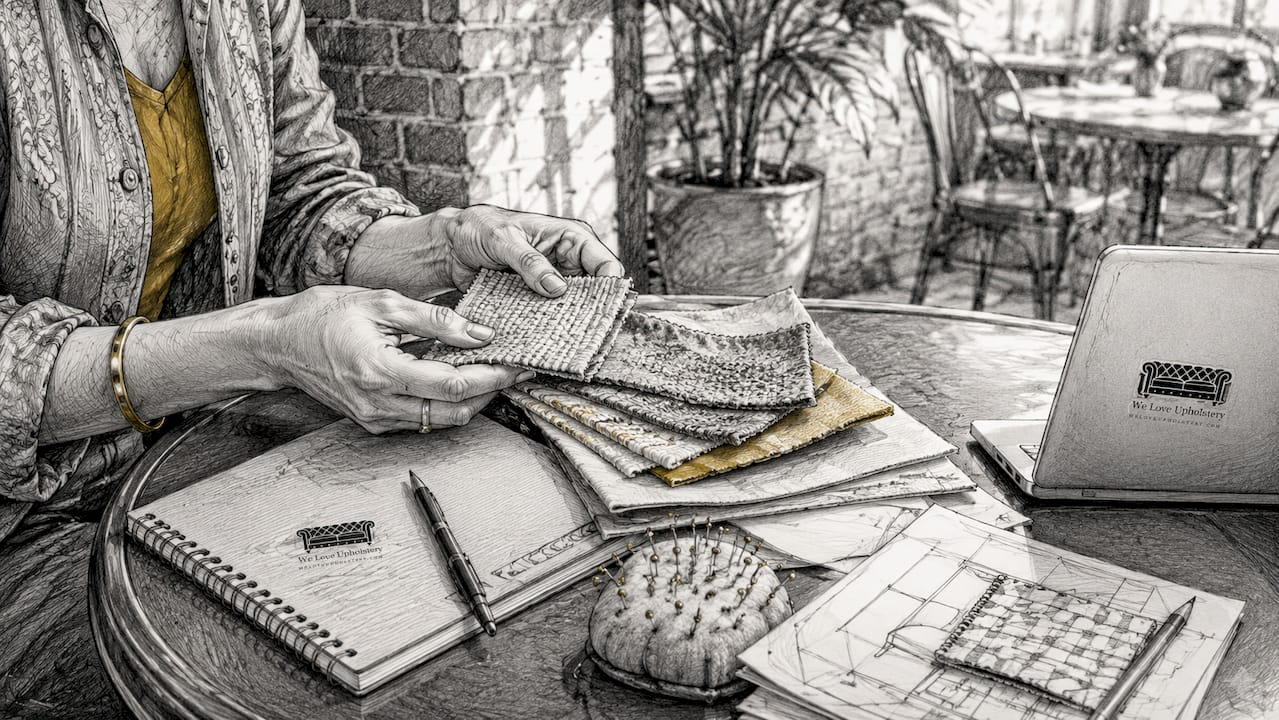
Fabric selection is where many bespoke projects succeed or fail. A fabric that looks perfect in a showroom can look flat, wear poorly, or fade quickly once it is in your home. The right choice depends on three factors: your room’s lighting, the piece’s expected wear pattern, and the texture you want to live with daily.
Here is a breakdown of the most common material categories and where each performs best:
- Full-grain leather. Durable, ages well, and works in high-traffic rooms. Requires conditioning but resists spills and surface abrasion. Best for sofas and armchairs used daily.
- Hand-loomed weaves. Textured, visually rich, and suited to lower-traffic spaces like reading rooms or formal sitting areas. More delicate than performance fabrics.
- Performance fabric blends. Engineered for durability and stain resistance. Brands like Sunbrella and Crypton produce fabrics rated for heavy use. Ideal for family rooms and homes with pets or children.
- Velvet and chenille. Luxurious in appearance but sensitive to crushing and direct sunlight. Best in rooms with controlled light and moderate use.
Pro Tip: Request a fabric sample and live with it in your room for 48 hours before committing. Observe it in morning light, afternoon sun, and artificial evening light. Colors and textures shift significantly across different lighting conditions.
For a deeper look at fabric types and durability ratings, the upholstery fabric guide at Weloveupholstery covers the full range of options with practical selection advice. If you are weighing leather against fabric specifically, the leather vs. fabric comparison at Weloveupholstery breaks down the decision by lifestyle and room type.
What are the advantages of bespoke upholstery for interior design?
The advantages of bespoke upholstery go well beyond aesthetics. Here are the most significant benefits for anyone planning a serious interior design project:
- Perfect spatial fit. Bespoke pieces are built to exact dimensions. A sofa can be made 10 inches narrower to fit a specific wall, or an armchair can be built lower to suit a room with a dropped ceiling.
- Total design control. You control every variable: arm height, seat depth, cushion firmness, fabric, leg style, and stitch pattern. Nothing is a compromise.
- Structural durability. Because the frame is engineered for the specific weight distribution and use pattern you describe, the piece holds up longer than a mass-produced equivalent.
- Personal expression. Interior design expert Faiza Seth describes bespoke as reflecting personal style in a way that mass-produced furniture simply cannot replicate.
- Heirloom potential. A well-built bespoke piece, made with quality materials and proper construction, can last decades and pass between generations.
“Bespoke upholstery creates a synergy between home design and individual taste that mass production cannot achieve.” — Interior design perspective via William Austin Upholstery
The durability argument is often underestimated. Most retail sofas use standardized frames built to a price point, not a performance standard. A bespoke frame built from kiln-dried hardwood with hand-tied springs will outlast three or four retail equivalents. Over a 20-year period, the cost per year of ownership often favors the bespoke option.
Key takeaways
Bespoke furniture upholstery is the only process that gives you complete control over structure, materials, and dimensions from the very first design decision.
| Point | Details |
|---|---|
| Bespoke starts from scratch | No template or existing model is used; the frame is engineered specifically for your project. |
| Client brief drives everything | Detailed dimensions and style references lead to more accurate quotes and better outcomes. |
| Fabric must match the environment | Choose materials based on lighting, wear patterns, and use, not showroom appearance alone. |
| Structural engineering determines durability | A frame built for your specific seat depth and cushion density outlasts adapted standard frames. |
| Bespoke offers heirloom longevity | Quality construction and tailored materials produce pieces that last decades, not years. |
Why bespoke upholstery changed how I think about furniture
Most people assume bespoke means expensive and ostentatious. I held that view for longer than I should have. What changed my thinking was watching a craftsperson build a frame from kiln-dried beech for a client with an unusually narrow Victorian hallway. The finished piece fit the space so precisely that it looked like the room had been designed around it. That is not something you achieve by ordering online and hoping for the best.
The real value of bespoke is precision, not luxury. When the seat depth is calibrated to the client’s height, when the cushion density matches how they actually sit, and when the fabric is chosen for the specific light in that room, the result feels inevitable. It feels like the furniture belongs there. That is a different experience from anything mass production offers.
I have also seen clients underestimate the importance of the brief. The quality of your initial input directly determines the quality of the outcome. Craftspeople are skilled, but they cannot read your mind. The more specific you are about dimensions, references, and intended use, the better the final piece will reflect what you actually wanted. Treat the brief like a design document, not a casual conversation.
— Dustin
Explore upholstery resources at Weloveupholstery
If this article has you thinking seriously about a bespoke or custom upholstery project, the next step is understanding your material options in depth.
Weloveupholstery offers a full upholstery fabric guide covering fabric types, durability ratings, and selection advice written by practitioners who have worked with these materials firsthand. For readers who want to go hands-on, the DIY guides section covers everything from reupholstering a chair to repairing sofa armrests. Whether you are commissioning a bespoke piece or tackling a restoration yourself, Weloveupholstery gives you the knowledge to make confident decisions and avoid costly mistakes.
FAQ
What does bespoke upholstery mean exactly?
Bespoke upholstery means a piece of furniture is built entirely from scratch based on a client’s specifications, with no pre-existing template or standard model as a starting point. The frame, structure, and materials are all originated for that specific project.
How is bespoke different from custom furniture upholstery?
Custom upholstery modifies an existing design by changing fabric, size, or finish, while bespoke creates an entirely new piece with original frame engineering. Bespoke offers complete design freedom; custom works within the constraints of a base model.
How long does a bespoke upholstery project take?
Timelines vary by complexity, but most bespoke projects take several weeks from brief to delivery, accounting for frame construction, material sourcing, and upholstery work. Workshops that specialize in made-to-order furniture typically provide a timeline estimate alongside the initial quote.
What fabrics work best for bespoke upholstery?
The best fabric depends on your room’s lighting, traffic level, and intended use. Full-grain leather and performance blends like Sunbrella work well in high-use spaces, while hand-loomed weaves and velvet suit lower-traffic, controlled environments. Fabric performance depends on matching the material to the environment, not selecting by price alone.
Is bespoke upholstery worth the investment for a home project?
For spaces with unusual dimensions, specific design requirements, or long-term use expectations, bespoke upholstery delivers a fit and durability that standard furniture cannot match. The cost per year of ownership often favors bespoke when the piece is built with quality materials and proper frame engineering.