Heads up: this post contains affiliate links. If you buy through them, We Love Upholstery may earn a small commission at no extra cost to you.
Your recliner stops mid-recline, grinds every time you lean back, or refuses to lock into position. Before you assume the whole thing needs to go, sofa recliner track repair explained properly reveals that most of these problems have straightforward fixes. The track mechanism is the spine of any recliner, and when it fails, the cause is usually something specific and treatable: a stretched cable, debris in the channel, or a worn spring. This guide walks you through every stage, from identifying what went wrong to fixing it yourself or knowing exactly when to call someone in.
Table of Contents
- Key Takeaways
- Sofa recliner track repair explained: types of failures
- How to diagnose your recliner track problem
- How to perform common recliner track repairs
- When to hire a professional for track repairs
- Preventive maintenance to keep your tracks running
- My honest take on recliner track repair
- Let Weloveupholstery help with your recliner repairs
- FAQ
Key Takeaways
| Point | Details |
|---|---|
| Most repairs are simple | Clearing debris or adjusting a cable often restores full function in under 15 minutes. |
| Diagnosis comes first | Identifying whether the issue is mechanical or electrical saves time and money before any repair. |
| Lubrication matters | Using dry silicone spray on sliding tracks prevents dust buildup and reduces wear significantly. |
| Power recliners need a reset first | Unplugging for 60 seconds clears control board faults before any parts replacement is considered. |
| Professional help has clear triggers | Bent frame components, internal wiring faults, and broken mechanism housings warrant expert service. |
Sofa recliner track repair explained: types of failures
Not every recliner problem points to the same culprit. Understanding the types of sofa recliner track repairs starts with knowing what category of recliner you own and where its mechanical weak points are.
Manual recliner failures almost always trace back to one of three places:
- Stretched or snapped cables. The most common manual recliner failure is a stretched or broken cable. These cables connect the handle to the release mechanism, and they fatigue over time from repeated pulling.
- Bent or misaligned track rails. When one side of the track bends even slightly, the footrest drags, sticks, or pops out of alignment under body weight.
- Worn springs and ratchets. Springs lose tension gradually. A recliner that won’t hold its reclined angle or snaps forward suddenly usually has a compromised spring or a ratchet tooth that’s worn flat.
- Obstructions in the track channel. Pet hair and debris jam recliner tracks more often than most people expect. This is one of the most overlooked causes of malfunction.
Power recliner failures follow a different pattern. Hidden electrical components like transformers and control switches fail more often than the motor itself, which surprises most owners who assume the motor is always to blame.
Here’s a quick comparison to help you read your recliner’s symptoms:
| Symptom | Likely cause | Recliner type |
|---|---|---|
| Handle pulls but nothing moves | Broken or stretched cable | Manual |
| Footrest sticks halfway | Bent track rail or obstruction | Manual or power |
| Grinding or loud creaking | Metal friction, possible bent track | Manual or power |
| Motor hums but chair won’t move | Transformer or switch fault | Power |
| Chair moves slowly or stops randomly | Loose power connection | Power |
| No response from remote or button | Control board or switch failure | Power |
Loud creaking specifically signals metal-on-metal friction, which often means a sliding track section is bent or under-lubricated. Left alone, that friction accelerates structural wear.
How to diagnose your recliner track problem
Rushing into repairs without a proper diagnosis is the fastest way to make things worse. This sofa recliner repair guide walks you through a methodical inspection that takes about 10 minutes and tells you exactly what you’re dealing with.
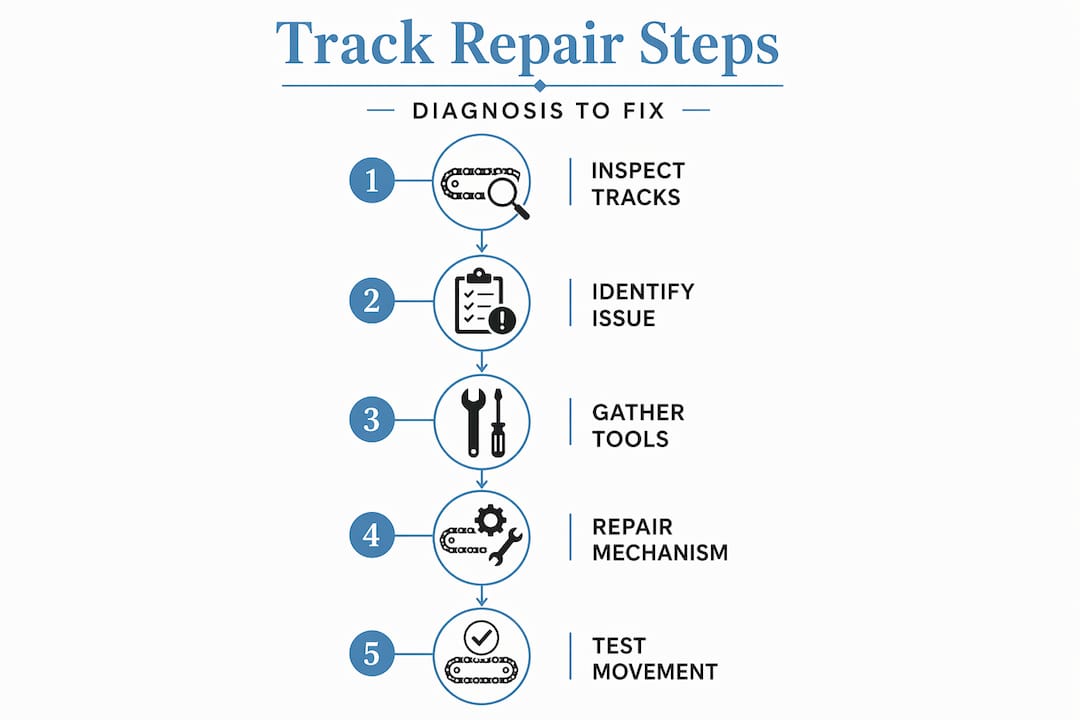
Tools you’ll need: A flashlight, a flat-head screwdriver, needle-nose pliers, and a phone camera (for photographing internal components before you disassemble anything).
Safety first: Unplug power recliners before any inspection. For manual recliners, fully close the footrest and make sure no one is seated during the inspection.
Here’s the step-by-step process:
- Clear the area and flip or tilt the recliner. Most recliner tracks are accessed from underneath. Tilt the chair back carefully onto its front face or have someone help you flip it so the base is visible.
- Visually scan every track rail. Look for bends, cracks, or sections where the metal looks stressed or discolored. Run your finger lightly along the rail to feel for warps you might not see.
- Check for debris in the track channel. Use a flashlight. Pet hair, coins, and even small toys can lock up a track completely without causing any permanent damage.
- Test the cable tension on manual recliners. Pull the release handle slowly and watch whether the cable moves the lever it connects to. If the cable moves but the mechanism doesn’t respond, the cable is stretched. If the cable doesn’t move at all, it may be snapped.
- Operate the footrest manually through its full range. Open it completely, then close it. Note where it catches, grinds, or requires extra force. That specific point in the travel range is where your problem lives.
- For power recliners, test the electrical basics first. Check that the cord is fully seated in the wall outlet, then inspect the connection points along the underside of the chair. Loose power connections cause the majority of power recliner failures that seem like motor problems.
- Attempt a power reset. Unplug for 60 seconds, then reconnect and test. This clears control board faults that mimic mechanical failure.
Pro Tip: Take photos of the track mechanism before you touch anything. When you reassemble, these photos are worth more than any instruction sheet.
If you can’t locate the problem after this inspection, or if you see cracked welds, bent frame members, or internal wiring with visible damage, stop there. Those situations need professional eyes.
How to perform common recliner track repairs
With your diagnosis in hand, fixing a recliner track is often a one-tool job. Here’s how to repair recliner track issues for the most frequent problems:
Replacing or adjusting a stretched cable
A stretched cable is the number-one manual recliner fix. Remove the staples or cable clips holding the old cable in place, note the routing path, and thread the replacement cable along the exact same route. Most replacement cables for common recliner brands cost between $10 and $30 at furniture supply stores. Pull the cable to its correct tension before clipping it, then test the handle motion before reassembling.
Fixing a bent track rail
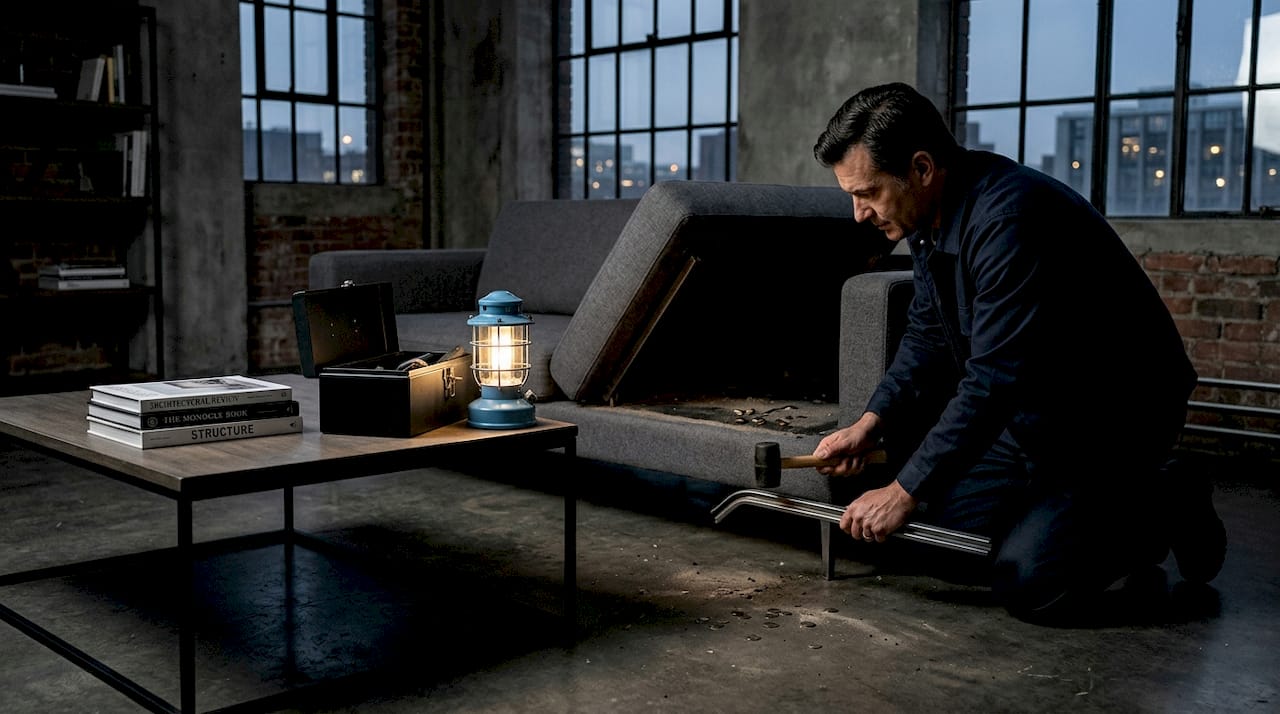
Bent tracks require patience. Use a rubber mallet (not a metal hammer) to gently work the rail back toward straight. Place a flat piece of scrap wood against the rail first to distribute the force and avoid creating new dents. If the bend is more than a 15-degree deflection, the rail likely needs replacement rather than straightening, because over-worked metal develops stress fractures.
Clearing obstructions and lubricating the track
Remove all visible debris with needle-nose pliers or compressed air. Once the track channel is clear, lubrication is your next move. Use a dry silicone spray rather than WD-40 or oil-based products. Oil-based lubricants attract dust and pack the channel with grime over time, which creates the very problem you’re trying to solve.
- Spray along the full length of both track rails
- Work the footrest through several full cycles to distribute the lubricant
- Wipe off any visible excess at the open ends of the track
Replacing worn springs and ratchets
Springs and ratchets are sold as components by most furniture parts suppliers. Match the spring gauge and length to your existing spring before ordering. Unhook the old spring with pliers, noting which anchor point connects to which bracket. Hook the new spring in place, making sure both ends are fully seated. A loose spring end is dangerous under load.
Troubleshooting power recliner electrical faults
- Check the transformer first, not the motor. Transformer and switch failures are far more common than motor failures.
- Inspect all visible wire connectors under the chair. Push each connector firmly to reseat it.
- Test the handset by plugging it into a second port if your chair has one.
- If the motor runs but the chair barely moves, the issue is likely in the track linkage, not the electrical system.
Pro Tip: Label every wire connector with a piece of masking tape before disconnecting anything electrical. Power recliner wiring looks deceptively similar across connectors, and swapping two is a fast way to burn out a control board.
Never attempt to splice internal motor wiring or modify the transformer. Those repairs require a certified technician to stay within safe electrical tolerances.
When to hire a professional for track repairs
Some repairs fall outside what’s safe or practical to do at home, and recognizing that line early saves money. Here’s when to stop and call in help:
- The track frame itself is cracked or welded joints have separated
- Multiple mechanism components failed at the same time
- Power wiring shows burn marks or melted insulation
- You can’t identify the problem after a full inspection
- The recliner is under manufacturer warranty (DIY repairs often void it)
Minor mechanical adjustments take under 15 minutes for an experienced technician, but full mechanism replacements run significantly higher. Here’s a realistic cost breakdown:
| Repair type | Estimated cost range |
|---|---|
| Cable replacement | $75 to $120 |
| Spring or ratchet replacement | $75 to $150 |
| Transformer or switch replacement | $100 to $200 |
| Full mechanism replacement | $200 to $600 |
| Electrical rewiring or motor repair | $150 to $350 |
When selecting a repair service, look for technicians who specialize in furniture or upholstery repair rather than general handymen. Ask whether they carry replacement parts for your recliner brand, and confirm whether the repair comes with a labor warranty. A professional repair from a qualified technician also extends the recliner’s total lifespan well beyond what a rushed DIY patch can achieve.
For sectional and modular sofa owners, some recliner mechanism parts for advanced seating configurations are available from furniture parts specialists if you’re sourcing components on your own.
Preventive maintenance to keep your tracks running
Recliner track maintenance tips are not complicated. Most of the work takes five minutes every few months.
- Clean the track channel every three months. A vacuum crevice tool pulls out pet hair, dust, and small debris before it packs into the mechanism.
- Apply dry silicone spray twice a year. Simple lubrication on track rails dramatically reduces mechanical wear and eliminates squeaking.
- Avoid overloading the chair. Check your recliner’s weight rating on the manufacturer label (usually under the seat cushion). Exceeding it bends tracks faster than any other single factor.
- Operate the footrest gently. Kicking the footrest out hard stresses the cable anchor and ratchet far beyond normal use loads.
- Watch for early warning signs. New squeaking, slight resistance mid-travel, or a handle that needs extra force are all signals to inspect and lubricate before anything breaks.
Pro Tip: Set a phone reminder every six months for recliner maintenance. Five minutes of cleaning and lubrication now prevents a $200 repair call later.
My honest take on recliner track repair
I’ve looked at a lot of recliners that homeowners gave up on too soon. In my experience, at least half of the “broken” recliners people want to replace just need a cable swap or a thorough cleaning. The problem is that people see the mechanism and assume complexity. They’re not wrong that it looks complicated, but most of that machinery does its work passively. When it fails, the active parts, cables, springs, and track slides, are almost always the culprits.
What I’ve found is that the biggest mistake homeowners make isn’t attempting a repair. It’s attempting a repair without any diagnosis first. Someone will reorder a spring when the real issue is a jammed track full of debris. Someone else will replace the motor on a power recliner when unplugging it for 60 seconds would have cleared the fault. Spend ten minutes diagnosing before you spend a dollar on parts.
The other misconception I hear is that recliners have a fixed lifespan and repairs aren’t worth it. That’s almost never true for quality chairs. A well-maintained recliner with good upholstery and properly serviced tracks can outlast a cheap replacement by a decade. Learn to read the symptoms, make the basic fixes, and you’ll save more money and frustration than you’d expect.
— Dustin
Let Weloveupholstery help with your recliner repairs
If your diagnosis led to something beyond a quick DIY fix, or you’d rather have someone handle it right the first time, Weloveupholstery is built for exactly this situation.

Weloveupholstery’s team specializes in furniture and upholstery repairs, including sofa recliner track work that most general repair services won’t touch. Whether your issue is a snapped cable, a bent track assembly, or an electrical fault in a power recliner, the approach is the same: diagnose precisely, repair what needs repairing, and leave you with a recliner that functions the way it should. You can browse the full range of repair services on the website, or visit the about page to learn more about the team’s experience and areas of expertise. Getting a personalized assessment means you’re not guessing what the fix costs before work begins.
FAQ
What are the most common sofa recliner track problems?
Stretched or broken cables, bent track rails, and debris obstructions are the leading causes of recliner track failure. Power recliners most often fail at the transformer or control switch rather than the motor.
How do I fix a recliner track that’s stuck halfway?
Check for debris in the track channel first, then inspect for a bent rail at the point where the footrest stops moving. Clear any obstruction and apply dry silicone spray before testing again.
Can I repair a recliner track without professional help?
Yes, for most common issues including cable replacement, lubrication, debris removal, and spring swaps. Cracked frame welds, burned wiring, or unfamiliar electrical faults are situations where professional repair is the better call.
How much does professional recliner track repair cost?
Replacing cables or springs typically runs $75 to $200, while full mechanism replacements cost between $200 and $600 depending on the recliner model and parts availability.
How often should I lubricate my recliner tracks?
Twice a year is sufficient for most recliners. Use a dry silicone spray on the full length of both track rails, and clean out debris before lubricating so you’re not sealing grime into the mechanism.
My Honest Take on Recliner Track Repairs
Recliner mechanisms get ignored until they completely stop working — that’s just how it goes. In my experience, most recliner track problems come down to two things: worn out bolts that were never checked, and cheap plastic components that weren’t built to last more than a few years of daily use.
The repair itself isn’t complicated, but people overthink it. If the recliner is stiff or squeaking, nine times out of ten a thorough cleaning and a round of lubrication fixes it completely. If it’s jamming or refusing to close, the track is either bent or a bolt has worked itself loose. Both of those are fixable at home with basic tools.
What I’d tell anyone before they start: take a photo of the mechanism before you disassemble anything. Recliner tracks have a lot of small pieces and it’s easy to forget how they fit back together. That one photo saves a lot of frustration.
— Dustin