
Heads up: this post contains affiliate links. If you buy through them, We Love Upholstery may earn a small commission at no extra cost to you.
Sleeper sofa repair basics cover three interconnected systems: the metal or wood folding frame, the mattress, and the upholstery fabric. Most homeowners treat these as separate problems, but a squeaking hinge often signals a loose bolt that also misaligns the mattress platform. The good news is that most common fixes take 15 to 30 minutes with tools you likely already own, including Allen keys, socket wrenches, and silicone lubricant. This guide walks you through mechanical repairs, mattress replacement, fabric care, and routine maintenance so you can restore your sleeper sofa without calling a professional for every issue.
What are the most common sleeper sofa mechanical problems?
Sleeper sofa mechanical issues fall into three categories: squeaking, stiffness, and misalignment. Each has a distinct cause, and diagnosing the right one before reaching for a lubricant saves you time and prevents making the problem worse.

Squeaking almost always points to loose fasteners or metal-on-metal friction at the hinge points. The sofa bed frame hinge is the pivot mechanism that allows the mattress platform to fold and unfold. When bolts loosen over time, the hinge rocks slightly with each movement, creating that familiar creak. Loose fasteners not only cause squeaks but also misalign the entire mechanism, making the sofa harder to close and accelerating wear on surrounding parts.
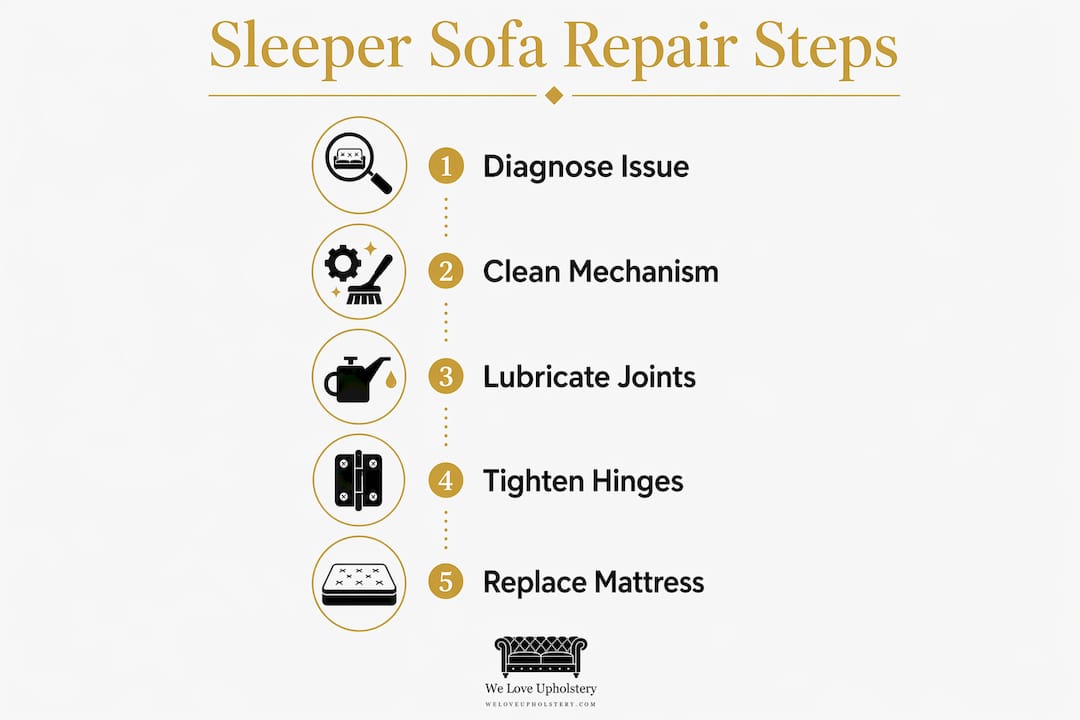
Stiffness during opening or closing usually means debris has collected in the track or hinge joints, or the mechanism has never been lubricated. The fix requires a specific sequence:
- Fully open the sofa bed and visually inspect all hinge points and track channels.
- Use a stiff brush or compressed air to clear out dust, hair, and debris from every joint.
- Tighten all visible bolts and screws with an Allen key or socket wrench, working from the center outward.
- Apply silicone spray lubricant to metal hinges and track points in short bursts.
- For wooden frames, rub candle wax directly onto rubbing surfaces instead of silicone. Wax provides clean friction reduction without attracting dust the way petroleum-based products do.
- Open and close the mechanism five to ten times to work the lubricant into the joints.
- Wipe away any excess lubricant with a dry cloth.
Misalignment shows up when one side of the frame sits higher than the other or the mattress platform does not lie flat. Check whether the legs on the unfolded frame touch the floor evenly. If one leg is bent or a hinge bracket has shifted, you may need to replace that specific bracket rather than just tighten it.
Pro Tip: Lubrication applied before cleaning joints traps debris inside the mechanism and worsens stiffness over time. Always clean first, then lubricate.
Sleeper sofa hinge repair is one area where homeowners frequently over-engineer the fix. Replacement hinges for most standard frames cost between $8 and $25 and are available through furniture hardware suppliers. If a hinge is cracked or bent, replacing it is faster and more reliable than trying to bend it back into shape.
How do you choose and replace a sleeper sofa mattress?
The mattress is the most replaced component in any sleeper sofa, yet it is also the most commonly purchased incorrectly. The single most critical step is measuring the frame cavity, not the old mattress. Old mattresses compress over time and often measure smaller than the actual frame opening. A mattress that is even half an inch too wide will jam the folding mechanism.
Mattress type matters as much as size. The three main options for sleeper sofas are:
- Memory foam: Folds without resistance, making it the best fit for most platform-style mechanisms. Look for a minimum foam density of 1.8 lb/ft³ to avoid bottoming out after a few months of use.
- Hybrid (foam and coil): Offers better support for regular use but adds weight and thickness. Check your frame’s weight rating before choosing this type.
- Innerspring: Traditional and affordable, but the coil structure can resist folding in tighter mechanisms. Best suited for frames with a wide fold radius.
Thickness is the other critical variable. The industry standard for platform-style sleeper sofas is approximately 4 inches. Exceeding that thickness causes closing problems regardless of mattress brand or material. If you want more comfort, a thin topper placed on top of a 4-inch mattress is a better solution than buying a thicker mattress.
| Mattress type | Best use case | Max recommended thickness |
|---|---|---|
| Memory foam | Most platform mechanisms | 4 inches |
| Hybrid | Frames with wide fold radius | 4 inches |
| Innerspring | Occasional use, wide mechanisms | 3.5 inches |
Mattress care extends replacement intervals significantly. Rotate the mattress 180 degrees every three months to distribute wear evenly. Air it out by leaving the sofa open for a few hours after guests use it. Avoid placing heavy objects on the folded sofa, since that compresses the mattress unevenly and creates permanent indentations.
What upholstery repairs can you do yourself?
Basic upholstery repair on a sleeper sofa is more approachable than most homeowners expect. Small tears respond well to upholstery thread and a curved needle, which lets you work in tight spaces where a straight needle cannot reach. For larger damaged areas, cut a patch from a hidden panel, such as the fabric underneath a cushion or the back panel facing the wall, and use fabric adhesive or hand stitching to secure it.
Before cleaning any fabric, check the cleaning code tag attached to the frame or cushion:
- W means water-based cleaners are safe. Use a mild dish soap solution and a clean white cloth.
- S requires solvent-based cleaners only. Water will cause shrinking or staining on these fabrics.
- WS permits both water and solvent-based methods, giving you more flexibility.
- X means the fabric requires professional cleaning. Attempting DIY cleaning risks permanent damage.
Always test your chosen cleaner on a hidden spot and wait 10 minutes before treating the visible area. This one step prevents most DIY cleaning disasters.
Pro Tip: Rubber gloves pulled across upholstery fabric remove embedded pet hair more effectively than a vacuum alone. Run the gloved hand in one direction to ball up the hair, then vacuum.
For ongoing fabric care, vacuum the sofa weekly using an upholstery brush attachment, paying attention to the seams and crevices where debris collects. A fabric de-pilling comb removes the small fiber balls that form on high-traffic areas and make fabric look worn before its time. For stains, keep a dedicated upholstery stain kit on hand. Products like Carbona Stain Devils or Folex Instant Carpet Spot Remover work on many common sofa fabrics, but always verify against the cleaning code first.
If you want to go further with fabric repairs or are considering a full reupholstery project, the DIY reupholstery guide at Weloveupholstery covers cushion and panel work in detail.
How often should you inspect and maintain a sleeper sofa?
Routine sleeper couch maintenance prevents the kind of gradual damage that turns a $30 repair into a $300 one. The inspection schedule below keeps mechanisms aligned and fabric in good condition without requiring significant time investment.
- Every 6 months: Open the sofa fully and check all visible bolts, screws, and hinge brackets. Tighten anything that has loosened. Experts recommend checking fasteners every 6 months and lubricating moving parts once per year. That schedule catches problems before they compound.
- Once per year: Apply fresh silicone lubricant to all metal joints and track channels after cleaning them. For motorized models, consult the manufacturer’s manual before applying any lubricant near electrical components.
- Every 3 months: Rotate the mattress 180 degrees and air it out for at least two hours. This prevents sagging and reduces odor buildup from moisture.
- After each use by guests: Inspect the frame for any new squeaks or resistance. Guest use puts more stress on mechanisms than daily light use because the sofa is opened and closed repeatedly in a short period.
The repair-versus-replace decision comes down to part availability and frame integrity. If the metal frame is bent or cracked at a load-bearing joint, replacement is the right call. If the issue is a worn hinge, a compressed mattress, or torn fabric, repair is almost always more cost-effective. Sofa beds in the mid-to-upper price range include sturdier hardwood frames with 2-year warranties, meaning those frames are worth repairing. Budget models with particle board frames often are not.
For a detailed look at sagging spring repair, Weloveupholstery has a step-by-step guide that covers the tools and techniques needed for that specific fix.
Key takeaways
Effective sleeper sofa repair requires diagnosing the correct system first, then applying the right fix in the right sequence.
| Point | Details |
|---|---|
| Clean before lubricating | Debris in joints traps lubricant and worsens stiffness. Always clean first. |
| Measure the frame cavity | Old mattresses compress and give inaccurate dimensions. Measure the frame opening directly. |
| Respect thickness limits | Platform-style frames max out at 4 inches. Thicker mattresses jam the mechanism. |
| Check fabric cleaning codes | Using the wrong cleaner permanently damages upholstery. Always verify the W, S, WS, or X code first. |
| Inspect every 6 months | Tightening loose fasteners twice a year prevents misalignment and extends mechanism life. |
Why I think most people repair their sleeper sofas in the wrong order
Most homeowners I have worked with grab the lubricant first. It feels like the obvious fix for any squeak or stiff fold. The problem is that lubricant applied over dirty joints seals the debris in place and creates a grinding compound that accelerates wear. I have seen mechanisms that were in decent shape get destroyed by well-meaning owners who skipped the cleaning step.
The second mistake I see constantly is buying a replacement mattress based on the old mattress dimensions. Old foam compresses by 10 to 20 percent over several years. A mattress that measures 3.5 inches might have started life at 4 inches. If you order a new 4-inch mattress based on that compressed measurement, it fits perfectly. If you order based on the old mattress, you end up with something too small that shifts around during sleep.
The upholstery repairs intimidate people the most, but they are actually the most forgiving. A slightly imperfect stitch on a hidden seam is invisible once the cushion is back in place. The mechanical repairs are less forgiving because a misaligned hinge puts stress on every other component. Get the frame right first, then address the fabric.
One last thing: if a repair feels beyond your skill level, that is a legitimate assessment, not a failure. Knowing when to call a professional upholsterer or furniture repair technician is part of good sleeper sofa troubleshooting, not a departure from it.
— Dustin
Take your sofa repairs further with Weloveupholstery
Fixing a sleeper sofa builds real confidence in upholstery work, and Weloveupholstery is built to support that progression. Whether you are patching a torn seam or planning a full fabric refresh, the site offers practical tutorials written by people who have done the work themselves.

Start with the upholstery fabric guide to understand which materials hold up best under the stress of a sleeper sofa’s repeated folding. For seam repairs that actually last, the loose seam repair tutorial walks through every step with clear instructions. If you need supplies for your next project, the DIY supply materials guide covers what to buy and where to start.
FAQ
How long does a typical sleeper sofa repair take?
Most mechanical fixes, including tightening bolts and lubricating hinges, take 15 to 30 minutes with basic tools. Small upholstery repairs like seam stitching or patching take 30 to 60 minutes depending on the size of the damaged area.
What tools do I need for basic sleeper sofa repairs?
An Allen key set, a socket wrench, silicone spray lubricant, and a curved upholstery needle cover the majority of common repairs. Candle wax is a useful addition for wooden frame mechanisms.
How do I know what size mattress fits my sleeper sofa?
Measure the interior dimensions of the frame cavity when the sofa is fully open, not the old mattress. Frame cavity dimensions are the only reliable guide because old mattresses compress over time and often measure smaller than the actual opening.
Can I clean my sleeper sofa fabric at home?
It depends on the cleaning code tag attached to the frame or cushion. Fabrics labeled W or WS can be cleaned with water-based solutions at home. Fabrics labeled S require solvent cleaners, and X-labeled fabrics need professional cleaning.
When should I replace instead of repair a sleeper sofa?
Replace the sofa when the metal frame is cracked or bent at a load-bearing joint, since that type of damage compromises structural safety. Worn hinges, compressed mattresses, and torn fabric are all worth repairing, especially on frames built with hardwood construction.