Heads up: this post contains affiliate links. If you buy through them, We Love Upholstery may earn a small commission at no extra cost to you.
If the paint is still wet, scrape off the excess with a dull knife, then blot (never scrub) with a mix of 1 tablespoon dish soap and 1 tablespoon white vinegar in 2 cups of warm water. If it’s already dried acrylic or latex, rubbing alcohol is your best shot at softening the resin. Oil-based paint calls for a solvent like mineral spirits, and you should stop the moment the fabric starts to react.
Whatever you do quickly matters more than delayed attempts afterward. Here’s the fast triage:
- Scrape off any excess paint with a plastic scraper or the dull edge of a butter knife, working from the outer edge of the spill inward.
- Blot, don’t rub. Rubbing pushes pigment deeper into the cushion fibers.
- Test your cleaner on a hidden patch of fabric first. Skip this step and you risk trading a paint stain for a bleach spot.
- Skip the hair dryer. Heat cures the paint’s binder and can lock the stain in permanently.
The Cooperative Extension Service at the University of Georgia backs this soap-and-vinegar approach for water-based paints, and it’s the same method Weloveupholstery recommends to readers who write in panicking about a toddler’s art project gone sideways.
Key Takeaways
Removing paint from a couch comes down to identifying the paint type fast, testing before treating, and blotting instead of scrubbing at every stage.
| Point | Details |
|---|---|
| Act within minutes | Scrape excess paint immediately since acrylic cures into a hard film the longer it sits. |
| Match cleaner to paint type | Use dish soap and vinegar for wet water-based paint, rubbing alcohol for dried acrylic, and solvents only for oil-based paint. |
| Always patch test first | Apply any cleaner to a hidden seam or cushion underside and wait several minutes before treating the visible stain. |
| Blot, never scrub | Scrubbing pushes pigment deeper into the padding and makes the stain harder to remove. |
| Know your stopping point | Call a professional if a stain persists past 90 minutes of careful work or shows dye bleeding during testing. |
| Learn fabric-specific handling | Weloveupholstery’s guides explain how different upholstery fabrics respond to cleaning and repair after stain treatment. |
Table of Contents
- Tools and Supplies You’ll Need Before You Start
- How Do You Get Wet Latex or Acrylic Paint Out of a Couch?
- What Removes Dried Acrylic or Latex Paint from Fabric?
- How Do You Remove Oil-Based Paint from a Couch?
- How Do You Test Upholstery Before Using a Stronger Cleaner?
- What Should You Never Do When Cleaning Paint off Upholstery?
- Why Do Soap, Alcohol, and Solvents Work So Differently?
- When Should You Stop and Call a Professional?
- How Do You Restore Fabric Texture After Removing a Stain?
- Does the Type of Couch Fabric Change the Removal Method?
- How Can You Prevent Future Paint Stains on Your Couch?
- Get More Upholstery Repair Know-How from Weloveupholstery
- Frequently Asked Questions
- Sources
Tools and Supplies You’ll Need Before You Start
Gather everything before you touch the stain. Running to the garage mid-cleanup while wet paint sits and dries is how a five-minute fix turns into an hour-long ordeal.
- A dull plastic scraper or butter knife (metal scrapers can snag fabric weave)
- Clean white cloths or microfiber towels, plus cotton swabs for detail work
- A spray bottle and a couple of small bowls for mixing solutions
- Mild dish soap, white vinegar, and rubbing alcohol (70 to 90 percent isopropyl)
- Mineral spirits or turpentine, reserved strictly for oil-based paint
- Rubber gloves and a well-ventilated room, especially if solvents come into play
Keep solvents away from kids and pets, and never work near an open flame or a lit stove. A patch test is non-negotiable before any of these touch the visible stain.
How Do You Get Wet Latex or Acrylic Paint Out of a Couch?
Fresh paint is the easiest case you’ll face, and speed is your biggest advantage. Acrylic in particular dries into a resilient, plastic-like film that gets harder to shift with every minute that passes.
- Protect the area and scrape off excess. Lay a towel underneath if the cushion is removable, then scrape the pooled or raised paint away from the edges toward the center. Don’t drag paint further into clean fabric.
- Mix your cleaning solution. Combine 1 tablespoon dish soap and 1 tablespoon white vinegar in 2 cups of warm water, following the same ratio recommended by UGA’s Cooperative Extension. Dip a clean cloth section and blot the stain, working inward.
- Rinse and dry. Once color transfer to your cloth stops, dampen a fresh cloth with plain water, blot the area to rinse out soap residue, then press with a dry towel to lift moisture.
Pro Tip: Keep the stain wet while you work. Once latex or acrylic paint dries partway through a cleaning session, you’ve effectively started the dried-paint process over from square one.
Small spills typically require a short period of active work for removal. If pigment is still visible after two or three blotting cycles, move on to the dried-paint method below rather than repeating the same soap solution indefinitely.
What Removes Dried Acrylic or Latex Paint from Fabric?
Once acrylic paint cures, plain soap and water won’t touch it. Rubbing alcohol becomes your primary tool, and it’s the solvent most stain removal guides point to specifically because it breaks down the acrylic resin without the aggressiveness of harsher chemicals.
- Scrape off any raised, crusty paint. Work slowly with the plastic scraper, lifting flakes rather than gouging at them.
- Patch test rubbing alcohol on a hidden spot. Apply a small amount, wait five minutes, and check for color transfer or fabric texture changes before going anywhere near the visible stain.
- Dab and dwell. If the test passes, saturate a cotton swab with rubbing alcohol, press it onto the paint, and let it sit for a minute before blotting with a clean cloth.
- Repeat until it lifts. Dried acrylic often needs several rounds. Rinse with a diluted soap solution afterward and blot dry.
Acetone or nail polish remover can work on tougher spots, but it can also damage acrylic-blend or synthetic upholstery fabrics, so only reach for it if your patch test comes back clean. Stubborn stains often need multiple short cycles of treatment over some time.
How Do You Remove Oil-Based Paint from a Couch?
Oil paint plays by different rules entirely. Water-based cleaners won’t dissolve an oil binder, so don’t waste time on the soap-and-vinegar method here. Confirm what you’re dealing with first. Check the can label if you have it, or note the paint’s telltale solvent smell.
- Scrape away excess, then patch test a solvent. Mineral spirits or turpentine can break down oil-based binders, but test on a hidden seam first to check for dye bleeding or fiber damage.
- Apply sparingly and blot. Dampen a cloth, not the fabric itself, and work the stain from the outside in.
- Rinse with mild soap afterward. This step removes solvent residue that can otherwise dull the fabric or attract dirt over time.
Work outdoors or crack every window in the room. Wear gloves, and dispose of solvent-soaked rags in a sealed metal container. If the fabric dulls, pills, or you see color migrating out of the treated area, stop immediately. That’s your cue to call a professional rather than push further.
How Do You Test Upholstery Before Using a Stronger Cleaner?
Every method above hinges on one habit: testing first. Pick a spot nobody sees, like the underside of a cushion or a back seam.
- Apply a small amount of your chosen cleaner to the hidden spot.
- Wait two to five minutes, then blot to check for dye transfer or a change in texture.
- If color lifts onto your cloth or the fabric feels different, stop and choose a gentler method instead.
Pro Tip: Snap a quick photo of the test spot before and after. Subtle fading is easy to miss in the moment but obvious once you compare two images side by side.
What Should You Never Do When Cleaning Paint off Upholstery?
A few habits turn a manageable stain into a permanent one.
- Don’t scrub. Scrubbing drives pigment deeper into the padding instead of lifting it out.
- Skip the hair dryer and direct sunlight. Heat cures acrylic and latex binders, locking the stain in for good.
- Ventilate any room where you’re using alcohol or solvents, and wear gloves throughout.
- Avoid bleach, high pH cleaners, and heavy soaking. Excess water seeps into the padding underneath and invites mold.
Why Do Soap, Alcohol, and Solvents Work So Differently?
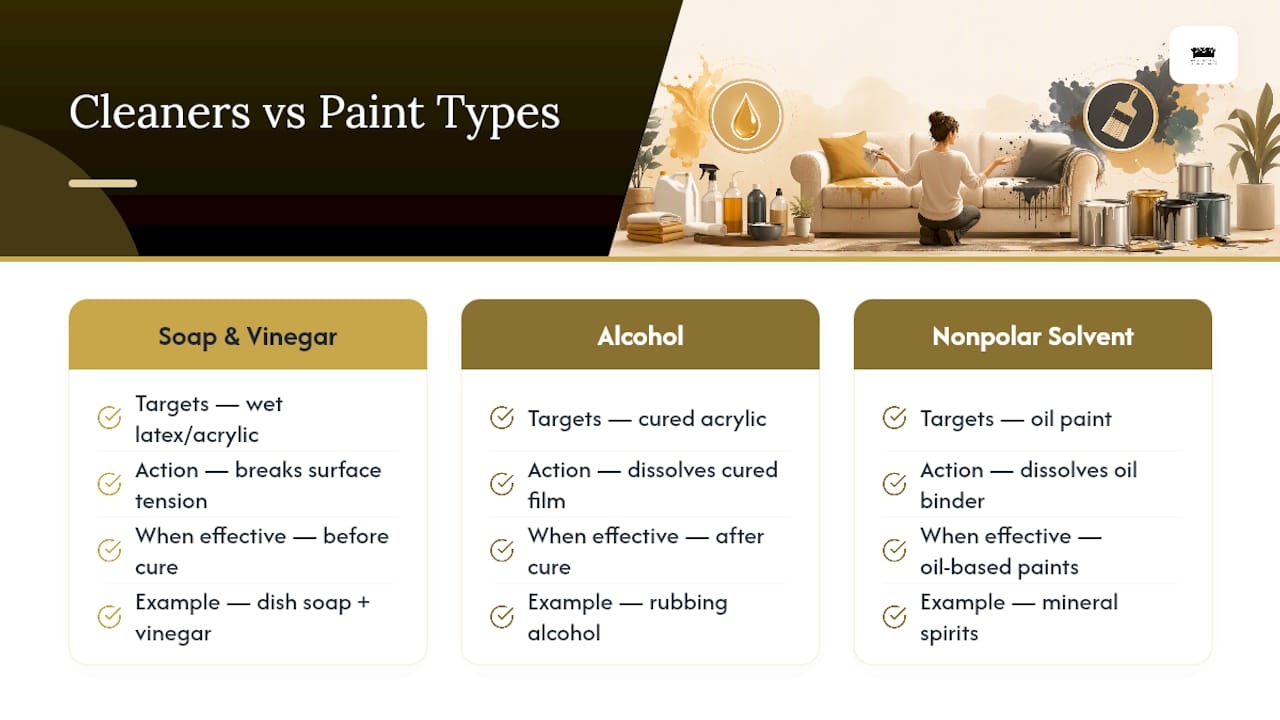
The chemistry explains why one method won’t cover every paint type. Wet latex and acrylic are water-based polymer emulsions, so dish soap acts as a surfactant that breaks the paint’s surface tension while vinegar’s acidity helps loosen the polymer bonds. Once acrylic cures, though, it becomes a plastic-like film that soap can’t touch, which is why alcohol takes over. Oil paint runs on a completely different binder, a nonpolar oil that only breaks down in nonpolar solvents like mineral spirits. Mixing up these categories, using soap on cured acrylic or water on oil paint, is why so many DIY attempts stall out. Over-wetting or applying heat causes its own damage: heat cures the binder further, and too much liquid soaks into the foam padding beneath the fabric.
When Should You Stop and Call a Professional?
DIY has limits, and pushing past them usually costs more than the professional cleaning would have.
- The stain covers a large area or has soaked through to the padding underneath.
- Repeated attempts have caused visible color loss or a change in fabric texture.
- The couch is upholstered in a delicate material like silk or fire-sheen velvet.
- Your patch test showed dye bleeding before you even started on the visible stain.
A professional brings industrial-grade solvents, low-moisture extraction equipment, and color restoration techniques that go beyond what’s safe to try at home. As a rule of thumb, If extensive careful spot work hasn’t improved the stain, further scrubbing is more likely to spread the damage than fix it.
How Do You Restore Fabric Texture After Removing a Stain?
Getting the paint out is only half the job. Whatever cleaner you used left behind moisture and possibly a faint residue, and how you handle the next hour affects whether the spot blends back into the rest of the cushion.
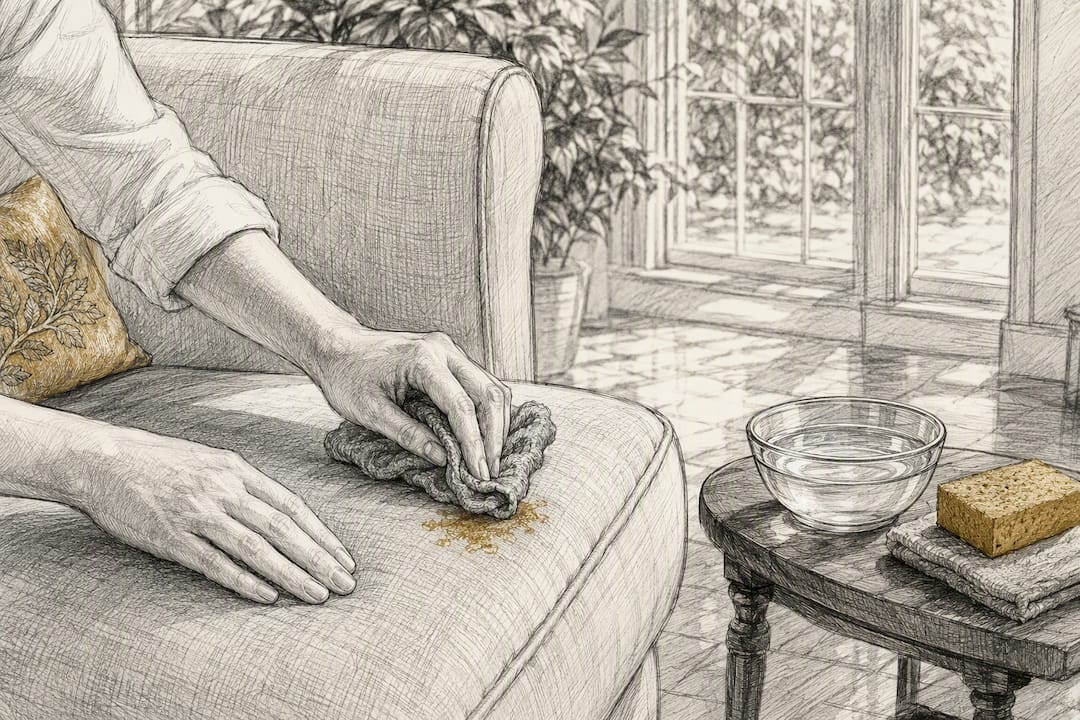
Start by blotting the treated area with a dry towel to pull out as much moisture as possible. Press firmly rather than rubbing, and switch to a fresh section of towel every few passes. Let the cushion air dry completely before anyone sits on it. Trapped moisture inside foam padding is how odor and mildew problems start days later, long after you’ve stopped thinking about the original stain.
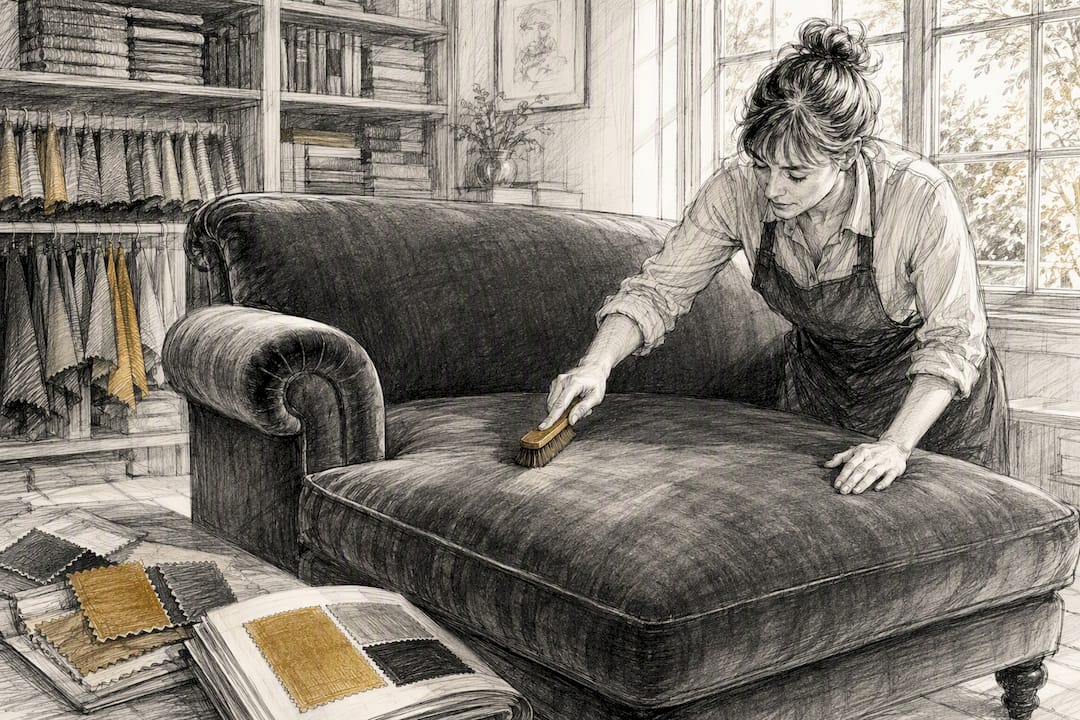
Once dry, check the fabric’s nap. Soap solutions and alcohol can flatten fibers temporarily, especially on chenille or corduroy weaves. A soft-bristle brush, worked gently in the direction of the nap, usually restores the texture within a few passes. For fabrics that still feel stiff after drying, a light misting of plain water followed by another brushing session often loosens residual soap film.
If you’re noticing a broader dinginess beyond just the treated spot, an upholstery shampoo formulated for fabric couches can even out the appearance without the aggressive chemistry of a paint solvent. And if the cushion still smells faintly of vinegar or alcohol a day later, ventilation and time solve that far better than masking it with fabric spray.
Does the Type of Couch Fabric Change the Removal Method?
Not every couch responds to these steps the same way, and this is where a lot of DIY paint removal goes wrong. Cotton and linen blends tend to tolerate soap solutions and rubbing alcohol reasonably well, which is why they’re the fabrics UGA’s guidance and most extension resources are built around. Polyester and other synthetic weaves are hit or miss. Some hold up fine to alcohol; others develop a slight sheen or texture change where the solvent touched them, which is exactly why the patch test isn’t optional.
Velvet and microsuede need the lightest possible touch. Both fabrics have a nap that shows water marks and pressure lines easily, so blot with minimal moisture and brush the nap back into place immediately after drying. Leather and faux leather are a different animal entirely. Water-based paint often sits on top of the surface rather than soaking in, so a damp cloth alone may lift it before you need any solvent at all.
Silk and other delicate natural fibers are where caution matters most. These fabrics can water-spot permanently from a soap solution and discolor from alcohol, so a failed patch test here should send you straight to a professional rather than a second attempt with a different cleaner. Checking your couch’s manufacturer cleaning code, if one exists, before you start saves guesswork. Weloveupholstery’s upholstery fabric guide breaks down which fibers pair safely with which cleaning methods.
How Can You Prevent Future Paint Stains on Your Couch?
The best paint stain is the one that never happens. If you’re painting anywhere near the living room, whether it’s a wall, a craft project, or furniture refinishing, cover the couch completely with a canvas drop cloth rather than a thin plastic sheet, which slides and bunches under weight.
Keep paint supplies, especially opened cans and loaded brushes, off any surface where a small bump could tip them onto the cushions. If kids are doing art projects nearby, a washable paint smock and a designated craft table beat hoping nothing spills. For households that paint furniture or do craft projects regularly, a removable, machine-washable couch cover adds a layer of protection that’s far easier to launder than treating upholstery fiber by fiber.
Fabric protector sprays designed for upholstery can also buy you reaction time. They won’t make a couch paint-proof, but they slow how quickly liquid paint soaks into the fibers, giving you those crucial extra minutes to scrape and blot before the spill sets. Reapply these treatments periodically, since they wear off with regular cleaning and use.
A Note on Sticking with Gentler Methods First
I lean conservative on this one. Test first, use the mildest method that has a real shot at working, and only reach for solvents when soap and alcohol have genuinely failed. A couch you love isn’t the place to experiment with whatever’s under the sink.
Get More Upholstery Repair Know-How from Weloveupholstery
Getting the paint out is often just step one. If the cleaning process left the fabric nap flattened, a seam under stress from all that blotting, or you’re staring at a stain that didn’t fully lift and are now weighing a patch repair, Weloveupholstery’s guides pick up right where this one leaves off.

Unlike a general cleaning blog, every guide here comes from people who work with upholstery fabric directly, so the advice accounts for how fibers, padding, and seams actually behave under stress, not just how a stain reacts to a chemical. Before you buy replacement fabric or a repair kit, the Upholstery Fabric Guide walks you through fiber types and cleaning codes so you know exactly what your couch can tolerate next time. If the stain won this round and a patch or partial reupholster is the next step, browse the DIY Guides archive for a project that matches what you’re facing. Start there, and you’ll know within a few minutes whether this is a weekend fix or a job worth handing off.
Frequently Asked Questions
Does rubbing alcohol damage couch fabric?
It can, on certain synthetics, which is why a patch test on a hidden seam always comes before treating the visible stain. Cotton and linen blends typically tolerate rubbing alcohol well, but some polyester weaves develop a sheen or texture change.
Can you remove paint from a couch without ruining the fabric?
Yes, in most cases, if you act quickly and test your cleaner first. Fresh water-based paint responds well to a dish soap and vinegar solution, while dried acrylic usually needs rubbing alcohol applied in short, repeated cycles rather than one aggressive treatment.
What household items get paint out of a couch?
Dish soap, white vinegar, and rubbing alcohol handle most latex and acrylic stains. Mineral spirits are needed for oil-based paint, but that’s a solvent, not a typical household staple, so treat it with the same caution and ventilation as any chemical cleaner.
How long does dried paint take to remove from upholstery?
Expect 30 to 90 minutes of short, repeated alcohol application and blotting cycles for stubborn dried acrylic. Fresh, wet paint usually clears in 15 to 30 minutes of active work if you catch it before it sets.
Is it safe to use nail polish remover on a couch?
Only if a patch test on a hidden area shows no reaction. Acetone-based removers can dissolve certain synthetic fibers along with the paint, so reserve it as a last resort after rubbing alcohol has failed.
Sources
- How to get paint off furniture (The Spruce)
- How to Remove Acrylic Paint from Upholstery (StainRemovalGuides)