Heads up: this post contains affiliate links. If you buy through them, We Love Upholstery may earn a small commission at no extra cost to you.
Reupholster if the frame is intact and the foam still bounces back after a firm squeeze. Replace if the foam smells musty, crumbles under pressure, or the frame itself has cracked. That single test settles most cases before you ever pick up a needle.
- Reupholster when: foam passes a compression test, no persistent odor, fabric is just faded or torn.
- Replace when: mold has worked into the foam core, the frame is bent, or repairs would cost more than 60% of a new custom cushion.
Statistic: Reticulated foam typically lasts 8 to 12 years, often outlasting the fabric wrapped around it, so a sound core is worth saving even when the cover looks wrecked.
Key Takeaways
Outdoor cushion reupholstery succeeds when reticulated foam and proper drainage holes are prioritized over fabric brand, since construction quality determines whether the cushion survives a full season outdoors.
| Point | Details |
|---|---|
| Test before you commit | Run a compression test on the foam; crumbling or musty odor means replace, not reupholster. |
| Budget realistically | DIY materials run about $20 to $50 per cushion versus $80 to $200 for a custom replacement. |
| Foam beats fabric brand | Reticulated foam with proper drainage outlasts premium fabric wrapped around the wrong core. |
| Follow the build sequence | Repair the frame, cut foam to size, sew with reinforced seams, then add drainage holes last. |
| Start with Weloveupholstery’s fabric guide | Use the upholstery fabric guide to pick the right material before cutting a single panel. |
Table of Contents
- When Is Outdoor Cushion Reupholstery Worth It?
- What Materials and Tools Do You Need for Outdoor Cushion Fabric and Foam?
- How Do You Reupholster an Outdoor Cushion Step by Step?
- Are There No-Sew Options for Recovering Patio Cushions?
- Where to Buy Custom Cushions and Outdoor Fabric
- What Are the Most Common Reupholstery Mistakes?
- How Do You Maintain Outdoor Cushions So They Last Longer?
- Get Templates and Supply Recommendations From Weloveupholstery
- Frequently Asked Questions About Outdoor Cushion Reupholstery
- Sources
When Is Outdoor Cushion Reupholstery Worth It?
Reupholstery pays off when the bones are good. DIY material costs run about $20 to $50 per cushion for fabric and basic supplies, while a custom replacement cushion typically runs $80 to $200 depending on fabric grade and foam density. Professional reupholstery labor usually lands somewhere in between, driven mostly by how many panels and zippers the piece needs.
Time wise, expect your first cushion to take two to three hours while you figure out the pattern and machine settings. Every cushion after that goes faster, often under an hour once you’ve got a rhythm.
Skip reupholstery and replace outright when you see these signals:
- Foam that crumbles, smells musty, or fails a pinch test after a deep clean
- A crushed frame, broken springs, or webbing that’s torn loose from the base
- Mold that’s already visible on the surface, since interior rot is usually further along than it looks
Quick check: if the frame is solid and the foam bounces back, reupholster. If either fails, replace.
What Materials and Tools Do You Need for Outdoor Cushion Fabric and Foam?
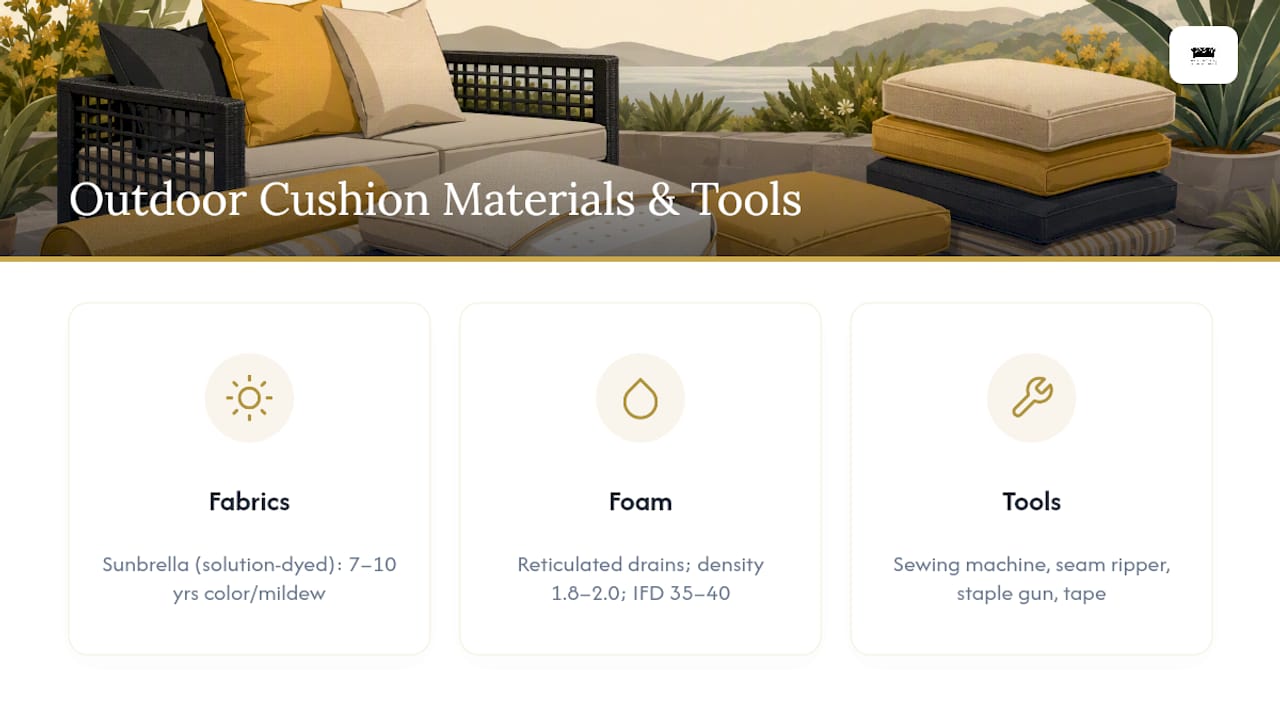
Fabric choice matters less than most people assume, but it still matters. Solution-dyed acrylic fabrics like Sunbrella are the standard for cushions that sit in full sun all day, holding color and resisting mildew for 7 to 10 years with basic care. Marine vinyl handles heavy splash zones near pools better than woven fabric. Rated outdoor polyester, often sold through mills like Phifer, costs less and still holds up 5 to 7 years if the piece sits under a porch roof or umbrella most of the season.
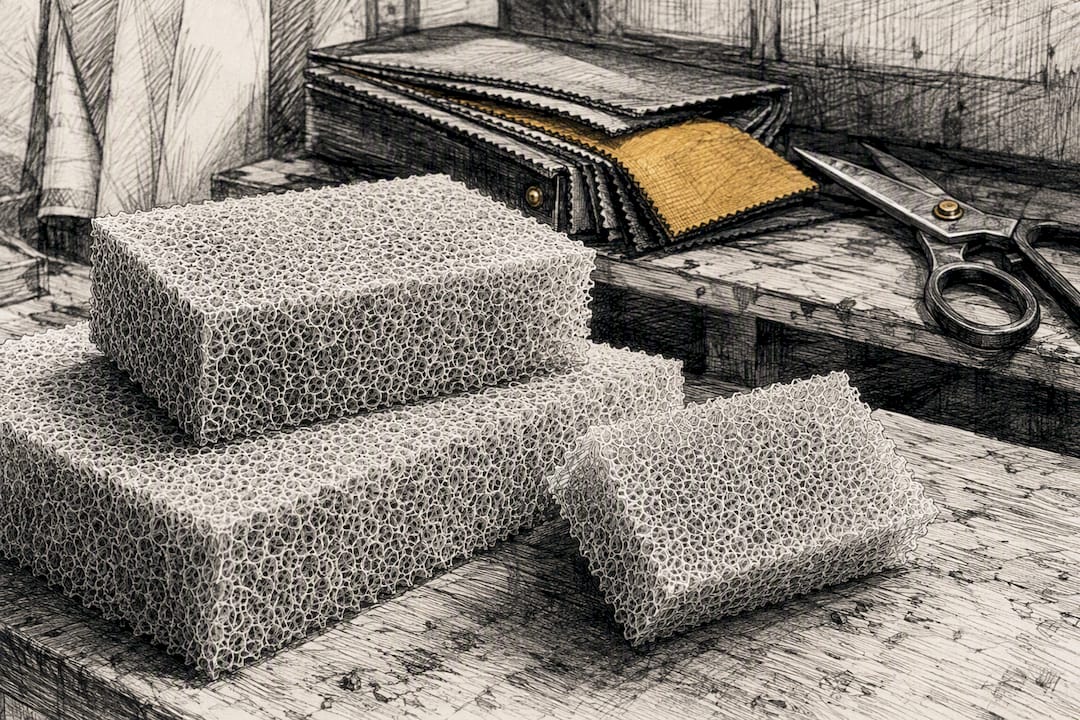
Foam is where cushions actually fail. Reticulated, open-cell foam drains water instead of trapping it, and the industry recommendation is a density around 1.8 to 2.0 with an IFD/ILD in the 35 to 40 range. Closed-cell foam feels firmer off the shelf but holds moisture against itself, which is exactly how internal mold starts. Skip memory foam entirely outdoors; it absorbs water like a sponge and rarely dries out between rains.
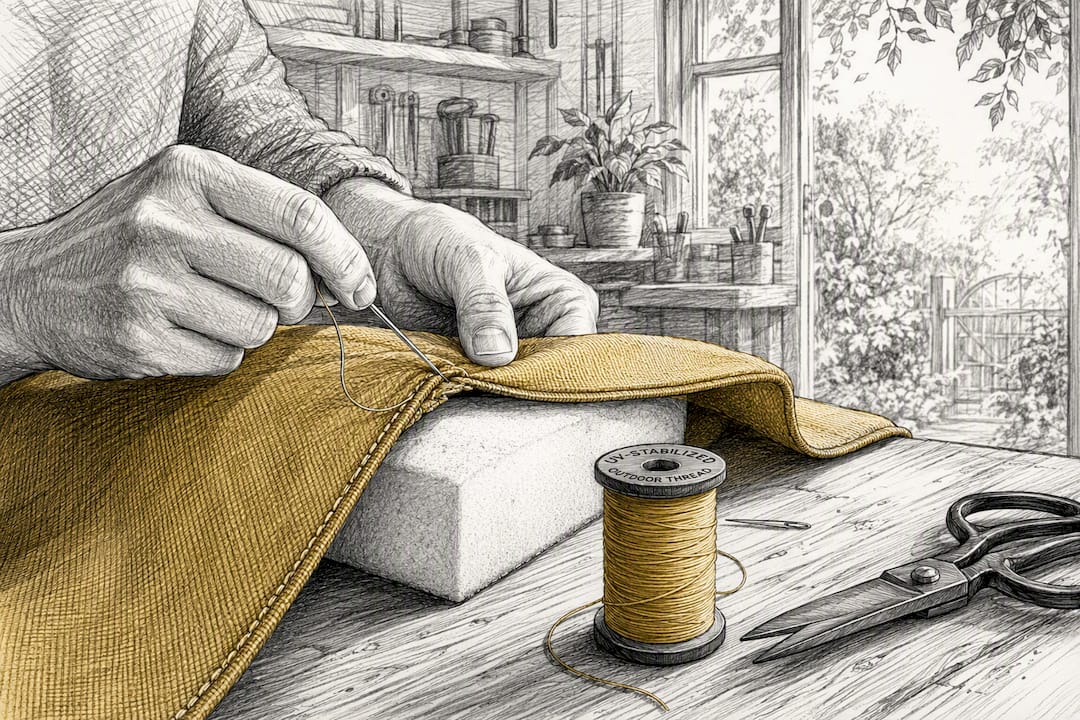
Round out your shopping list with UV-stabilized thread, marine-grade zippers, and 316 stainless steel hardware if the cushion attaches to a frame. On the tool side, you’ll want a seam ripper, a heavy-duty sewing machine with a walking foot or a leather needle, a staple gun for fixed bases, sharp scissors, and a long measuring tape.
Pro Tip: Spend your budget on the right foam and drainage holes before you spend it on a premium fabric brand. A FoamOrder-style reticulated core with basic outdoor polyester will outlast a Sunbrella cover wrapped around the wrong foam.
For a deeper rundown on fabric weights and weave types, the upholstery fabric guide breaks down how each material behaves under sun and moisture.
How Do You Reupholster an Outdoor Cushion Step by Step?
The construction order matters as much as the sewing itself. Skip a step and you’ll be redoing the whole cushion in a year.
- Inspect and clean first. Wash the old cover, then compression test the foam. Musty smell or crumbling means replace, not reupholster.
- Remove the old cover with a seam ripper, taking it apart panel by panel rather than cutting it off. Keep every piece flat; it becomes your pattern.
- Lay the old pieces on your new fabric and trace around them, adding at least half an inch of seam allowance on standard panels. Chair pads that wrap around a base often need up to 3 inches of extra allowance to tuck and secure properly.
- Watch directional patterns and stripes when laying out panels. Cut all pieces from the same direction so the repeat lines up once sewn.
- Sew right sides together, reinforcing the seams that take the most stress: corners and the boxing strip where the top meets the sides. A heavier needle and outdoor-rated thread matter here more than stitch count.
- Install a zipper or Velcro strip along one edge if you want a removable, washable cover. Leave the bottom seam open until the foam goes in.
- Cut the reticulated foam to the cushion’s finished dimensions and insert it, then close the final seam.
- Add grommeted drainage holes, roughly half an inch in diameter and spaced evenly across the low points of the bottom boxing strip, before attaching any hardware or tie straps.
- Verify the fit. Check that seams sit flush, corners hold their shape, and water poured lightly over the bottom drains through instead of pooling.
This sequence, outlined by upholstery tutorials covering patio lounge cushions specifically, keeps you from sewing a beautiful cover around foam that will mold by August. For a longer illustrated version of this same panel-and-seam logic on a bigger project, the T-cushion sofa reupholstery guide walks through comparable techniques at a larger scale.
Are There No-Sew Options for Recovering Patio Cushions?
Not everyone owns a sewing machine, and that’s fine for some situations. Wrap-and-pin methods, where you fold fabric around the cushion and secure it with heavy-duty fabric pins, work as a short-term fix for a cushion you’ll replace next season anyway.
- Velcro straps and staple-on fabric work for fixed cushions that never come off the base, since you’re not building in a removable cover.
- No-sew adhesive fabric can patch a small torn section without redoing the whole panel.
- Steam-based foam revival can restore some loft to a flattened core, but it carries real drying risk and needs thorough air-drying afterward to avoid trapping moisture inside.
The tradeoff is durability and cleaning access. A stapled or pinned cover can’t come off for washing, and none of these methods hold up to repeated soaking the way a sewn, zippered cover does. Treat them as a stopgap, not a real fix, unless the cushion is due for replacement within a year anyway.
Where to Buy Custom Cushions and Outdoor Fabric
Some projects are better handed off, and when you need durable outdoor seating for care facilities, moblera uteområde för vårdinrättning offers a complete guide to heavy-duty options designed for healthcare settings. Complex piping, curved chaise shapes, or a finish that needs to look store-bought are all good reasons to order custom rather than sew it yourself. Local upholstery shops handle one-off shapes well, while fabric mills and foam suppliers work better for straightforward panels you’ll assemble yourself.
Before you order, ask any supplier these questions:
- What’s the fabric’s UV rating and expected fade warranty?
- What foam specs are offered: is it reticulated, and what density and ILD range?
- What’s the lead time from order to delivery, and what’s the return policy on cut fabric?
- Do they ship, and what does shipping cost on bulky foam orders?
Suppliers like FoamOrder specialize in custom-cut foam cores shipped directly to your door, which solves the biggest bottleneck most DIYers hit: finding the right density locally. For sourcing fabric by the yard, the materials and supplies page rounds up where to find outdoor-rated options without guessing on quality.
What Are the Most Common Reupholstery Mistakes?
The single biggest mistake practitioners point to isn’t sewing skill, it’s choosing fabric brand over construction quality. Premium fabric wrapped around the wrong foam still fails within a season.
- Using indoor foam because it was cheaper or already on hand
- Skipping drainage holes entirely, which traps water against the foam
- Cutting panels with insufficient seam allowance, leaving no room to adjust fit
- Ignoring pattern direction, so stripes or repeats don’t line up at the seams
Pro Tip: Reinforce every corner seam twice before you insert foam, not after. Once the cushion is stuffed and closed, restitching a weak corner means unpicking the whole panel. Before final assembly, do a quick water test on the bottom panel and a fit check on the foam. Both take five minutes and catch the two failures that ruin most cushions later.
How Do You Maintain Outdoor Cushions So They Last Longer?
A short weekly habit beats an annual deep clean. Brush off debris weekly, spot clean spills immediately before they set, and do a full wash with mild soap and water every month or two during heavy-use season.
- Mix a diluted bleach solution for surface mildew on fabric, but if the smell persists after cleaning, the mold has likely reached the foam and replacement is the only real fix.
- Store cushions dry, and pull the foam out of its cover for long winter storage if you have the space.
- A zippered cover makes seasonal removal and washing dramatically easier than a stapled one.
Statistic: Solution-dyed acrylic fabric with regular care holds up 7 to 10 years, but that clock resets to zero the moment water sits trapped against foam that can’t drain.
When Does DIY Reupholstery Actually Make Sense?
DIY shines on repeatable box cushions where you’re sewing the same panel shape four or six times. Hand off curved chaise lounges, commercial patio seating, or anything on a tight deadline to a professional shop instead.
Get Templates and Supply Recommendations From Weloveupholstery
Weloveupholstery gives you what the average blog post skips: exact seam allowances, foam specs, and a materials list you can actually shop from, instead of vague encouragement to “measure carefully.”

If you’re standing in a fabric store right now trying to decide between Sunbrella, marine vinyl, and a rated polyester blend, the upholstery fabric guide walks through how each one behaves under sun, salt air, and repeated washing so you buy the right one the first time. Pair it with the DIY guides archive for downloadable templates and project checklists that match the steps in this guide. Start with the fabric guide, build your shopping list, then come back for the pattern templates before you cut a single panel.
Frequently Asked Questions About Outdoor Cushion Reupholstery
Is outdoor cushion reupholstery cheaper than buying new cushions?
Usually, yes. DIY materials run $20 to $50 per cushion compared to $80 to $200 for a custom replacement, as long as the foam and frame are still sound.
What’s the best fabric for outdoor cushion recovery?
Solution-dyed acrylic fabric like Sunbrella holds color and resists mildew longest in full sun. Rated outdoor polyester costs less and works well under partial shade.
Can I reuse my old foam when I reupholster?
Only if it passes a compression test with no odor. If it’s flattened but odor free, steam revival can restore some loft, but replacing with reticulated foam is more reliable long term.
Do I need a special sewing machine for outdoor fabric?
A heavy-duty machine with a walking foot or leather needle handles marine vinyl and heavier acrylics far better than a standard home machine.
How long does DIY cushion reupholstery take?
Expect two to three hours for your first cushion while you build the pattern, then under an hour for each one after that.
Sources
- Phifer – Reupholster guidance
- StitchDesk – Outdoor furniture reupholstery guide
- KOVI Fabrics – DIY video tutorial
- RoyalComport – Reupholster outdoor cushions guide
- Rapidrepair