If you need a straight answer: natural latex (Dunlop), bio-based polyurethane foam, coconut coir builds, and densified polyester fiber are the four practical non toxic upholstery foam options worth your money right now. Each solves a different problem. Natural latex handles seating that takes daily abuse. Bio-based PU works when you want conventional foam behavior without petroleum feedstocks. Coir and natural fiber builds suit period restorations. Densified polyester fiber is the budget-friendly, moisture-resistant pick for cushions and pet furniture.
Before you buy anything, do this one thing: ask the supplier for CertiPUR-US documentation or, for latex, GOLS/Eco Institut lab reports. Then air the foam out before upholstering.
- Natural latex (Dunlop) for durable seating
- Bio-based PU for conventional foam feel with less petroleum content
- Coconut coir and natural fiber for restorations
- Densified polyester fiber for cushions and pet beds
- Match ILD/firmness to the seat type before you cut anything
Key Takeaways
Non toxic upholstery foam works when the material passes chamber emissions testing, the firmness matches the seat’s support system, and the adhesives receive the same scrutiny as the foam itself.
| Point | Details |
|---|---|
| Verify before buying | Request CertiPUR-US or GOLS/Eco Institut documentation, not just marketing claims. |
| Match ILD to seat type | Sofa seats need higher firmness ratings than chair backs or decorative cushions. |
| Vet the whole assembly | Adhesives and batting often cause more odor issues than certified foam does. |
| Air out new foam | Ventilate for 24 to 48 hours before cutting and installing. |
| Sample before committing | Order a small cut to test firmness and smell before ordering a full set. |
Table of Contents
- What “non toxic upholstery foam” actually means
- The real alternatives, compared
- How to pick the right foam for your project
- Installing non toxic foam without the fumes
- Where to buy and what to ask first
- Practitioner notes from Weloveupholstery
- Why certification beats guesswork every time
- Sources
What “non toxic upholstery foam” actually means
“Non toxic” isn’t a legal term with one fixed definition. It’s shorthand for foam that has passed independent emissions testing and avoids specific chemicals linked to indoor air problems. That distinction matters when you’re comparing a marketing claim to an actual lab result.
CertiPUR-US is the certification most DIY upholsterers will run into. It requires chamber testing after a 72 hour conditioning period, and the 2025 technical guidelines cap total VOC emissions at under 0.5 mg/m3. Certified foam also can’t contain formaldehyde, certain phthalates, heavy metals, or specific flame retardants.
Statistic Callout: CertiPUR-US requires chamber testing of foam samples after conditioning to meet low total VOC emissions, ensuring indoor air quality.
For natural latex, look for GOLS (Global Organic Latex Standard) or Eco Institut testing instead. These focus on purity of the raw latex rather than the urethane chemistry CertiPUR-US screens for.
Here’s the catch nobody mentions on product pages: certification tests the foam itself in a lab, not your finished cushion. An independent breakdown of what CertiPUR-US actually tests points out that adhesives, batting, and fabric finishes sit outside the certification’s scope entirely. A certified foam core wrapped in a cheap spray-glued batting can still smell.
Before buying, ask for:
- A current CertiPUR-US certificate or GOLS/Eco Institut lab report
- A small sample cut you can air out and smell-test yourself
- Batch or lot testing IDs if the supplier can provide them
The real alternatives, compared
1. Natural latex (Dunlop)
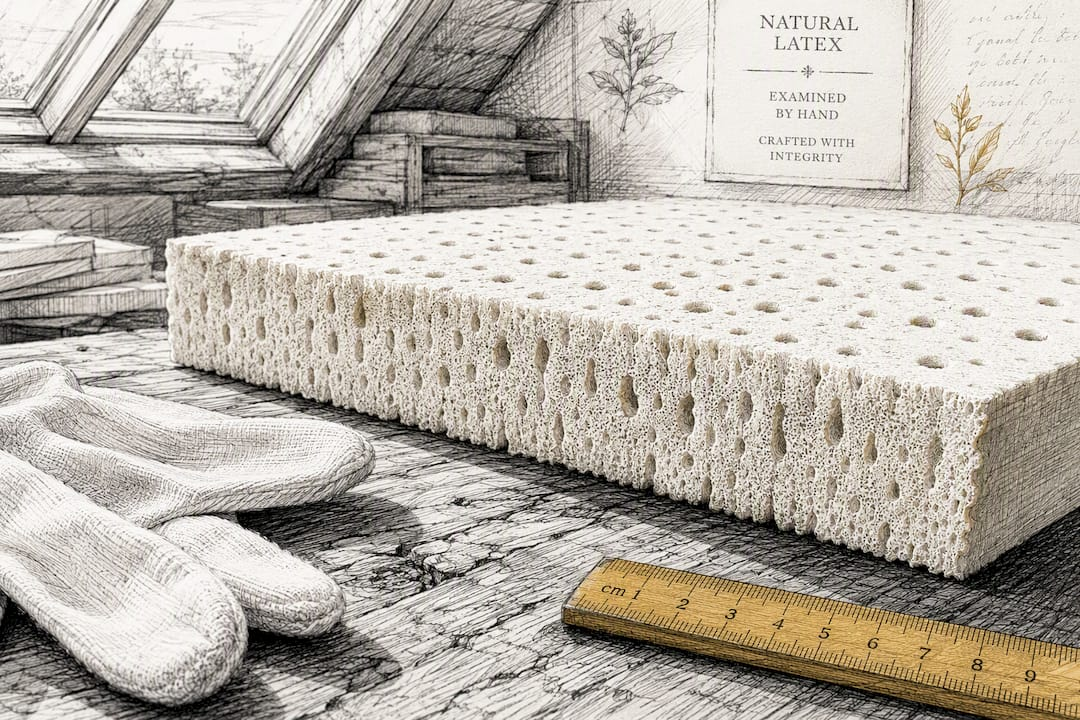
Dunlop latex is the workhorse of non toxic upholstery. It’s sold cut-to-order in specific ILD (firmness) grades, so you’re not guessing at density the way you sometimes do with generic foam blocks. It resists dust mites and mold on its own, without chemical treatment, and it holds shape for years under regular sitting weight. Ask for GOLS or Eco Institut paperwork specifically. A latex sheet with no purity documentation is just latex, not certified organic latex, and the price difference should reflect that.
2. Bio-based polyurethane (OrganoFoam-style)
Fraunhofer LBF’s OrganoFoam project demonstrated that flexible PU foam made from renewable feedstocks can be cut, bonded, and laminated with the same equipment used for conventional foam, at comparable density and resilience. For a DIYer, that’s the appeal: it behaves like the foam you already know how to work with, minus most of the petroleum content. Availability through retail suppliers is still catching up to conventional PU, so expect to hunt a bit or special-order.
3. Coconut coir and natural fiber builds
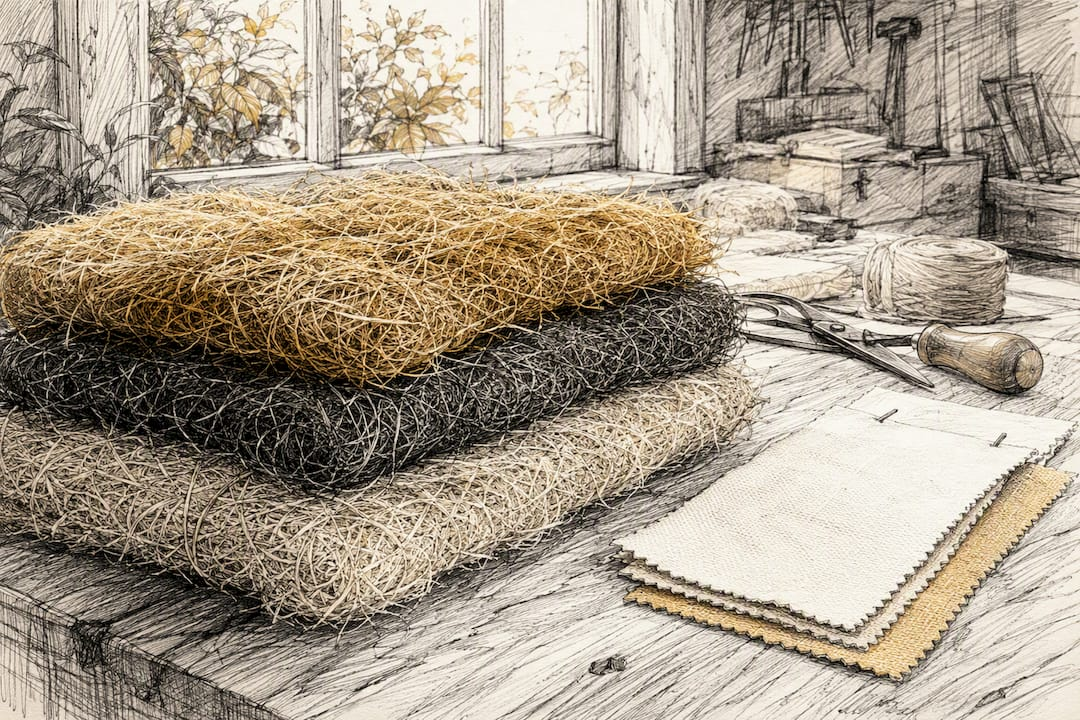
Coir, horsehair, and hemp have been upholstery materials for well over a century, long before foam existed at all. Trade sourcing on natural fiber alternatives notes their open structure ventilates well and pairs naturally with a latex or wool topper for comfort. They’re firm on their own, which is exactly why traditional builds layer them under something softer rather than using coir alone as the seating surface.
4. Densified polyester fiber (Home Foam)
Densified polyester fiber is the non-urethane option most people haven’t heard of until they need it. It’s hydrophobic, dries fast, and resists mold, which makes it a smart pick for cushions that see moisture or pet beds that need frequent washing. It’s not as supportive as latex for a heavily used sofa seat, but for accent cushions or lower-load applications it’s genuinely non toxic and noticeably cheaper.
5. Wool and horsehair
For period-accurate restorations, wool and horsehair remain the standard. They breathe, resist compression over decades, and carry zero synthetic emissions concerns. The tradeoff is labor: hand-tufting and traditional stitching take real time to learn, and these materials cost more per yard than any foam alternative.
How to pick the right foam for your project
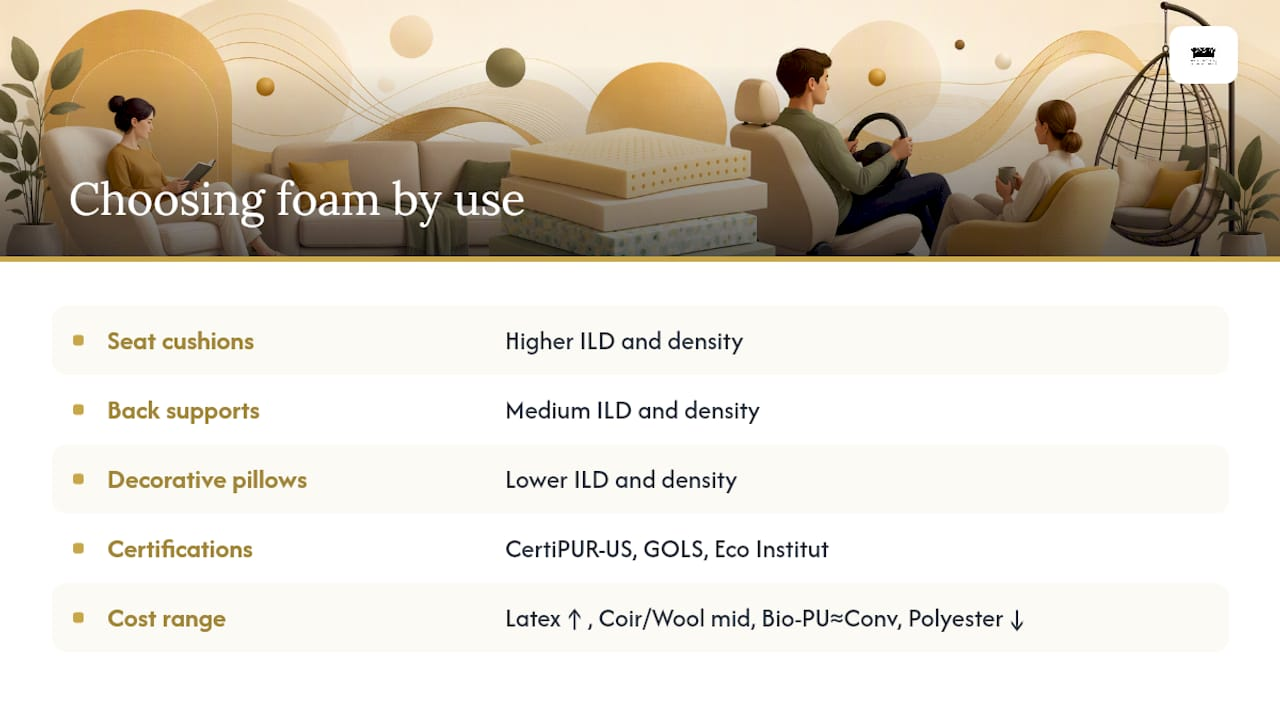
Start with the seat type, not the material name. A sofa seat cushion generally needs a higher ILD (firmness rating) and density than a chair back or a decorative pillow. Weloveupholstery’s foam density guide breaks down what those ILD numbers mean in practice, which is worth reading before you order anything cut to size.
Once you know your firmness range, filter by certification. A supplier who can hand you a CertiPUR-US certificate or a GOLS/Eco Institut lab report on request is generally more reliable across the board, not just on chemistry.
Confirm workability next: can the material be cut to your pattern, and will your adhesive bond to it cleanly? Some bio-based PU foams behave slightly differently under contact cement than conventional foam, so check the supplier’s notes.
Budget-wise, expect natural latex to run highest per cushion, bio-based PU close to conventional foam pricing, and densified polyester fiber as the value option. Coir and wool sit in between, depending on sourcing.
Pro Tip: Order one sample cut before committing to a full cushion set. A five-dollar sample that turns out too firm saves you from an expensive mistake on the real piece.
Installing non toxic foam without the fumes
- Air it out first. Unwrap new foam and let it sit in a ventilated space for 24 to 48 hours before cutting, longer if you notice any smell at all.
- Check your adhesive’s data sheet. A low-VOC spray adhesive matters as much as the foam choice itself; read the technical sheet, not just the label.
- Cut and staple with the space ventilated. Open a window or run a fan while cutting foam and applying adhesive, especially with coir or fiber blends that shed dust.
- Laminate in thin layers when bonding materials. Thin adhesive coats cure faster and off-gas less than one thick pass.
- Inspect after 24 hours. If you still smell adhesive or foam once the cushion is assembled, pull it apart and re-air rather than covering the smell with fabric.
Where to buy and what to ask first
Specialty foam cutters and latex suppliers who publish ILD grades and certification documents upfront are worth the slightly higher price over anonymous online listings. Before ordering, confirm:
- Current CertiPUR-US or GOLS/Eco Institut documentation
- Exact ILD/firmness number, not just “firm” or “medium”
- Cutting tolerances and turnaround time
- A return or exchange policy if the foam smells wrong on arrival
Local specialty cutters often let you smell and press a sample in person, which online suppliers can’t offer.
Practitioner notes from Weloveupholstery
- Cross-check ILD against our foam density guide before ordering, not after.
- Adhesives and batting often cause more odor complaints than the foam itself. Review our fabric glue guide before choosing one.
- The most common rookie error: skipping the sample cut and discovering the firmness is wrong only after the cushion is sewn shut.
Once your foam is cut and the cushion is together, the next test is durability. If a seam gives out under the new fill, our guide on repairing a loose upholstery seam walks through the fix so the project holds up long term. For the rest of your supply list, the materials and supplies archive rounds up batting, fabric, and adhesive picks that pair well with the foams covered here.
Why certification beats guesswork every time
The upholstery world still treats “non toxic” as a vibe rather than a measurable claim, and that’s backward. A CertiPUR-US chamber test or a GOLS lab report tells you something concrete: this specific foam, tested under specific conditions, stayed under a specific emissions threshold. That’s worth more than any supplier’s word choice on a product page.
Where the conventional advice falls short is stopping at the foam. I’d argue the adhesive and batting deserve equal scrutiny, because a certified foam core wrapped in an uncertified spray-glued batting is still an uncertified cushion in practice. Treat the whole assembly, not just the foam, as the thing you’re vetting.
If you take one thing from this: prioritize the paperwork before the price tag. A slightly more expensive foam with real lab documentation saves you the rework, the lingering smell, and the guessing game that comes with picking foam on faith. Match firmness to the support system underneath it, verify the certificate, then build.
— Dustin
Sources
- CertiPUR-US: About the certification
- Fraunhofer LBF: Bio-based polyurethane flexible foams (OrganoFoam)
- Home Foam densified polyester fiber – The Warm Company