Heads up: this post contains affiliate links. If you buy through them, We Love Upholstery may earn a small commission at no extra cost to you.
Suede furniture has a way of making a room feel warmer and more inviting than almost any other material. But the moment something spills, tears, or scuffs, you quickly realize that what is suede couch repair is a very different conversation than fixing a regular fabric or leather sofa. Unlike smooth leather, suede has a delicate nap (the soft, raised fibers on the surface) that responds badly to water, heat, and scrubbing. The good news is that most suede damage is reversible with the right approach. This guide walks you through everything from identifying your material type to patching tears and restoring texture at home.
Table of Contents
- Key takeaways
- What suede couch repair actually means
- How to clean and restore suede nap
- Repairing tears, holes, and burns
- Troubleshooting common repair challenges
- My honest take on suede couch care
- Get expert help for your suede couch
- FAQ
Key takeaways
| Point | Details |
|---|---|
| Suede repair differs from leather repair | Suede upholstery requires dry-first cleaning and nap restoration, not standard leather kits. |
| Care codes are non-negotiable | Always check the W/S/W-S/X tag before applying any product to your couch. |
| Steam and heat cause damage | Steam is unsafe for suede due to shrinkage, dye migration, and adhesive breakdown. |
| Nap direction determines repair success | Matching nap direction when patching prevents visible color and texture differences. |
| Know when to call a pro | Oil stains, large tears, or an “X” care code mean professional help is the smarter move. |
What suede couch repair actually means
Many homeowners assume suede repair works the same way as treating any other couch fabric. That assumption causes most of the damage. Suede couch repair means restoring suede upholstery through spot-cleaning, cosmetic refinishing, and patching, not by reaching for a standard leather repair kit or a wet cloth.
Suede is made from the underside of animal hide, which gives it that signature soft texture. Microsuede, the more common option in modern furniture, is a synthetic fabric engineered to mimic that feel. Both share the same core vulnerability: the nap. Once those fine fibers get wet, flattened, or overworked, they lose their velvety appearance and can become permanently stiff or discolored.
Natural suede vs. microsuede
Natural suede is more sensitive to moisture and stains but can sometimes be professionally refinished with dyes or conditioners. Microsuede is more durable and slightly more forgiving with water-based cleaners, but it still needs careful handling. Before you try fixing suede furniture, you need to know which one you have. Check the tag on your couch cushion or the back panel of the frame for a label.
Reading your care code
That small tag with a letter on it is more important than most people realize. Care codes guide your entire cleaning approach:
- W: Water-based cleaners are safe to use
- S: Solvent-based cleaners only (no water)
- W-S: Both water and solvent cleaners are acceptable
- X: No liquid cleaners at all; vacuuming and brushing only
Ignoring these codes leads to stiff, spotted, or discolored fabric that no amount of brushing will fix. Moisture sensitivity causes spotting and nap damage when the care code is ignored, and that damage is often permanent.
Pro Tip: Always spot-test any cleaner on a hidden area (underneath a cushion, for example) and let it dry fully before using it on a visible surface.
How to clean and restore suede nap
Cleaning is the most common form of suede upholstery care, and it is also where most people go wrong. The process below applies to routine cleaning and minor texture restoration.
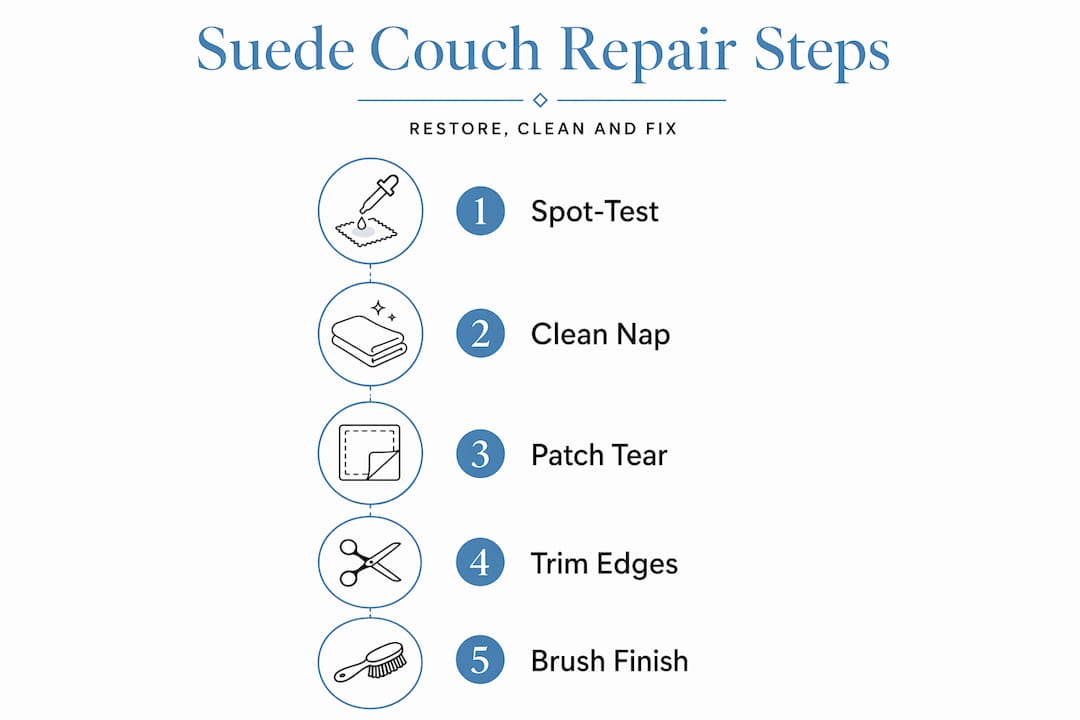
- Vacuum first. Use a soft brush attachment and go over the entire surface to lift loose dirt and debris. Never press hard. You are lifting, not scrubbing.
- Brush the nap. Use a dedicated suede brush and stroke in one consistent direction to raise the fibers. This alone can refresh a tired-looking couch.
- Spot-test your cleaner. Apply a small amount to a hidden area. Wait for it to dry completely, then check for color change or texture shift before moving on.
- Apply cleaner sparingly. Per your care code, use either a water-based foam cleaner or a dry solvent cleaner. Dab, don’t rub. Work from the outside of a stain inward to prevent spreading.
- Air-dry only. Step away from the hair dryer. Steam and heat-based cleaning methods compromise suede by softening underlying adhesives and causing uneven stiffening or color shifts. Open a window and let air do the work.
- Final brush. Once fully dry, use the suede brush again in one consistent direction to realign the nap and restore that soft, even texture.
The most common mistakes people make here are over-wetting the fabric, rubbing stains instead of blotting, and using a heat gun or blow dryer to speed up drying. Treating suede like washable fabric or smooth leather is exactly what leads to cleaning failures.
Pro Tip: Over-brushing in multiple directions can worsen appearance instead of fixing it. Always brush in one consistent direction and let the fabric rest between passes.
Repairing tears, holes, and burns
Physical damage calls for a different set of skills than cleaning, but many repairs are very doable at home. The key principle across all of them is patience and respect for nap direction.
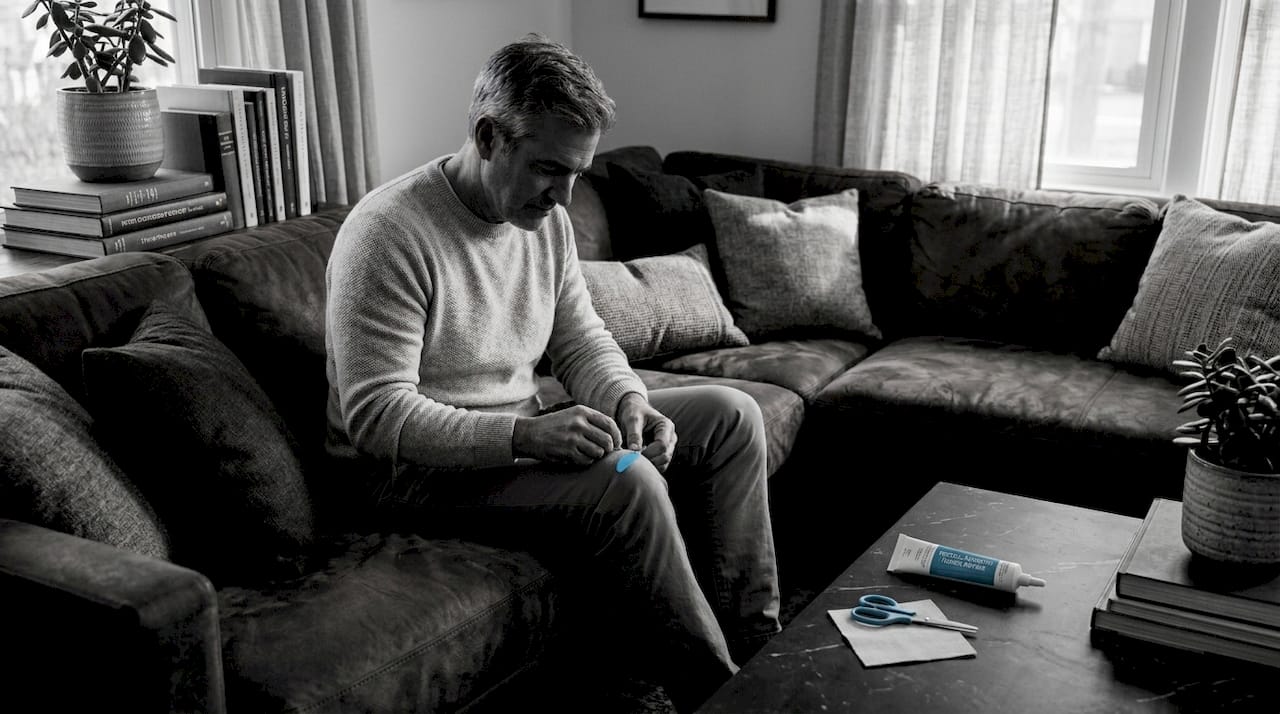
Small tears and holes
For small tears (roughly under an inch), your best approach is:
- Apply an anti-fray treatment to both torn edges before doing anything else. Anti-fray treatment on torn edges prevents tears from spreading under regular use.
- Once the anti-fray product dries, apply a thin layer of fabric glue to one side of the tear. Press the edges together and hold for the time specified on the product label. Fabric glue typically sets in about 10 minutes, but follow the manufacturer’s instructions exactly.
- After the glue cures, use a suede brush to very gently blend the repair area into the surrounding nap.
Larger tears and burn holes
Larger damage needs a backing fabric for structural support. Cut a piece of interfacing or thin cotton slightly larger than the tear. Slip it behind the damaged area, then apply fabric glue along the edges to anchor it. For tears longer than about two inches, invisible stitching combined with backing fabric gives a more lasting result than glue alone.
For burn holes, carefully trim away any damaged or singed fibers with small scissors before treating the edges. Then proceed with the patching method above.
Matching the nap
This is where most DIY repairs fall short. Matching nap direction in patches reduces the visibility of repairs and preserves the consistent light reflection that makes suede look velvety. When you cut a patch from spare fabric, run your finger across it and compare the direction of the fibers to the area you are repairing. They must flow the same way.
Here is a quick comparison of repair methods by damage type:
| Damage type | Recommended method | Key material needed |
|---|---|---|
| Small tear (under 1 inch) | Anti-fray treatment and fabric glue | Anti-fray spray, fabric glue |
| Large tear (over 2 inches) | Backing fabric and invisible stitching | Interfacing, upholstery thread |
| Burn hole | Fiber trim, then patch with backing | Small scissors, interfacing, glue |
| Surface scuff | Suede brush restoration only | Suede brush |
For help selecting the right materials, the guide on upholstery supply materials at Weloveupholstery covers what to look for when shopping for DIY repair supplies.
Troubleshooting common repair challenges
Even with the best intentions, suede repairs can run into problems. Here are the situations that catch most homeowners off guard.
Stubborn stains that won’t lift
Oil-based stains are the hardest. Cornstarch or baking soda applied dry and left overnight can absorb oil before any cleaner goes near the fabric. Ink stains often require a solvent cleaner, but only if your care code allows it. Water rings form when too much liquid is applied and dries in a ring pattern. The fix is to lightly dampen the entire cushion panel evenly (on a W-coded couch only) so it dries uniformly rather than leaving a tide mark.
Uneven nap after repairs
This usually comes from brushing in different directions or from using too much product in one spot. Always brush in a single direction and apply cleaners or adhesives in thin, even layers rather than large concentrated amounts.
When DIY is not the right call
Some situations go beyond what home repair can safely handle:
- Your couch has an X care code (no liquids allowed at all)
- The stain covers a large section of multiple cushions
- You see structural damage like broken seams along with surface damage
- The fabric color has already shifted from a previous cleaning attempt
In these cases, professional cleaning handles oily stains and color loss beyond the reach of DIY methods. A trained upholsterer also has access to professional-grade suede conditioners and dyes that simply are not available in consumer products.
Knowing when to stop is just as important as knowing how to start. Attempting one more DIY fix on already-damaged suede often turns a fixable problem into a permanent one.
Weloveupholstery has a useful breakdown of furniture repair value to help you decide whether a professional repair is worth the investment for your specific couch.
My honest take on suede couch care
I’ve watched homeowners spend hours trying to fix suede damage that they inadvertently made worse with the first cleaning attempt. The biggest mistake I see, over and over, is the belief that more effort equals better results. With suede, the opposite is almost always true.
In my experience, the couch repairs that turn out best are the ones where someone stops, reads the care tag, does a spot-test, and then proceeds slowly with the least aggressive method available. The people who grab a wet cloth and scrub immediately? They almost always regret it.
What genuinely changed my approach to nap restoration was treating the final brushing step as its own repair. Not just a finishing touch. When you take five minutes to work a clean suede brush gently across the dried fabric in one consistent direction, you can transform a patchy, tired surface into something that looks close to new. Most guides bury this step at the end like an afterthought. It deserves more attention than that.
I also want to push back on the common idea that steam is ever a safe shortcut for suede. I’ve seen people try it because a quick blast of steam fixed their issue with a different couch. On suede, the heat breaks down the adhesives in the fabric construction and permanently alters the nap. It is not worth the risk.
Finally, be realistic about color matching on patches. A perfect match is genuinely hard to achieve at home, especially on a couch that has seen a few years of sunlight and use. A close match done patiently looks far better than a perfect match rushed. Give yourself time.
— Dustin
Get expert help for your suede couch
Weloveupholstery is built for homeowners who want real guidance on couch repairs, not just surface-level tips.

If your suede couch has a loose seam opening up alongside surface damage, the detailed walkthrough on repairing loose upholstery seams gives you a step-by-step process you can follow at home. For repairs that have moved beyond what DIY can safely handle, the professional services page at Weloveupholstery connects you with expert upholsterers who specialize in delicate fabric restoration, including suede. Whether you need help sourcing the right patch material or want a professional to handle a large tear, there is a clear next step waiting for you. Your couch has more life in it than you might think.
FAQ
What is suede couch repair?
Suede couch repair is the process of restoring suede upholstery through spot-cleaning, nap restoration, and patching rather than using standard leather or fabric repair kits. It requires methods specific to suede’s moisture sensitivity and nap structure.
Can suede couches be repaired at home?
Yes, small tears, minor stains, and surface scuffs can all be addressed with DIY methods using fabric glue, anti-fray treatment, and a suede brush. Larger damage, deep stains, or couches with an X care code typically need professional attention.
How do you remove stains from a suede couch?
Blot liquid stains immediately with a dry cloth, then use a cleaner suited to your couch’s care code (W or S). For oil stains, apply dry cornstarch first and leave it overnight before brushing away and treating the area.
Why does steam damage suede furniture?
Manufacturers warn against steam cleaning suede because heat and moisture together cause dye migration, fabric shrinkage, and breakdown of adhesives beneath the surface, leading to permanent texture and color changes.
How often should you maintain a suede couch?
A light vacuum and brush with a suede brush every two to four weeks prevents dirt from embedding in the nap. Deep cleaning or spot treatment should happen as needed, always starting dry and following the care code on the label.